





Commercial vs. Residential Shipping: Which is Better for Your Bottom Line?
Last updated: August 2026
Key Takeaways
- Shipping costs in 2026 are heavily influenced by whether merchants ship to residential addresses, commercial locations, or a network of pickup points. The address type alone can determine 30-40% of your per-parcel cost variance.
- Residential shipping is typically 10-25% more expensive per parcel than commercial delivery due to residential surcharges ($6.45-6.50 per package at FedEx/UPS, 2026 rates), longer routes, and failed delivery attempts that can reach 8-20% in some markets.
- Commercial shipping and pickup-location networks reduce last-mile costs, lower failed deliveries, and cut chargebacks and theft, directly improving margins by $3-8 per parcel.
- Offering an alternative delivery method at checkout through a network of pickup locations can reduce shipping costs while increasing conversion rates for price-sensitive customers.
- This article provides concrete guidance, current benchmarks, and an action plan to determine the optimal mix of residential, commercial, and pickup-location deliveries for your bottom line.
Share:
Introduction: Why the Shipping Address Type Now Matters More Than Ever
Between 2020 and 2025, e-commerce parcel volumes surged dramatically, pushing carriers like UPS, FedEx, and USPS to refine their pricing structures in ways that fundamentally changed the cost calculus for online retailers. Rather than aggressive base rate increases, carriers shifted their pricing leverage into surcharges, residential delivery fees, and accessorial charges that hit home deliveries hardest.
In practical terms, “commercial shipping” refers to deliveries made to offices, retail stores, warehouses, and other staffed business locations during predictable hours. “Residential shipping” covers deliveries to individual homes, apartments, and condos where recipients may or may not be present. The distinction matters because carriers structure their entire route economics around delivery density—and residential America has very little of it.
Here’s the core argument: for many online retailers, continuing to ship the majority of orders to individual homes is becoming the most expensive, least predictable way to fulfill orders. The cost per stop in low-density residential routes can be two to three times higher than in dense commercial zones, even before surcharges enter the picture.
E-commerce merchants now have a third, fast-growing option: shipping to a network of pickup locations. Via.Delivery, for example, connects retailers to over 36,000 retail pickup points across the US, providing an alternative delivery method that combines commercial-level efficiency with consumer convenience. This article will use concrete examples, reference current industry data, and provide a practical decision framework for optimizing your shipping strategy.
In practical terms, “commercial shipping” refers to deliveries made to offices, retail stores, warehouses, and other staffed business locations during predictable hours. “Residential shipping” covers deliveries to individual homes, apartments, and condos where recipients may or may not be present. The distinction matters because carriers structure their entire route economics around delivery density—and residential America has very little of it.
Here’s the core argument: for many online retailers, continuing to ship the majority of orders to individual homes is becoming the most expensive, least predictable way to fulfill orders. The cost per stop in low-density residential routes can be two to three times higher than in dense commercial zones, even before surcharges enter the picture.
E-commerce merchants now have a third, fast-growing option: shipping to a network of pickup locations. Via.Delivery, for example, connects retailers to over 36,000 retail pickup points across the US, providing an alternative delivery method that combines commercial-level efficiency with consumer convenience. This article will use concrete examples, reference current industry data, and provide a practical decision framework for optimizing your shipping strategy.
How Carriers Price Residential vs. Commercial Shipping
Major carriers differentiate prices based on address type through a layered pricing model that stacks surcharges on top of base rates. Understanding this structure is critical to controlling your logistics operations and operational costs.
The key cost components affected by address type include:
In 2026, FedEx’s Home Delivery residential surcharge stands at $6.45 per package, while UPS charges $6.50 for residential ground delivery. For e-commerce companies shipping primarily to homes, these residential delivery hikes alone can add 5-10% to annual shipping budgets beyond the headline rate increases.
USPS is the one major exception among the big three carriers — it charges the same rate for residential and commercial deliveries, with no residential surcharge at all.
Address classification happens through carrier databases that designate locations as commercial or residential. Offices, retail stores, and warehouses receive commercial classification, while homes and apartments are flagged as residential. Mixed-use buildings can sometimes be misclassified, affecting your bills—making regular invoice audits essential.
Negotiated carrier contracts for mid-market shippers typically have different discount structures for commercial versus residential consignments. A contract that looks favorable on commercial rates may still expose you to significant costs if 90%+ of your volume ships to residential addresses.
The key cost components affected by address type include:
- Base rate: The starting price determined by weight, dimensions, and zone
- Residential surcharge: An additional fee applied to home deliveries ($6.45+ per parcel)
- Fuel surcharge: A percentage-based fee that compounds on higher base rates
- Delivery area surcharge (DAS): Extra charges for extended or rural ZIP codes
- Additional handling fees: Applied to oversized or awkwardly shaped packages
In 2026, FedEx’s Home Delivery residential surcharge stands at $6.45 per package, while UPS charges $6.50 for residential ground delivery. For e-commerce companies shipping primarily to homes, these residential delivery hikes alone can add 5-10% to annual shipping budgets beyond the headline rate increases.
USPS is the one major exception among the big three carriers — it charges the same rate for residential and commercial deliveries, with no residential surcharge at all.
Address classification happens through carrier databases that designate locations as commercial or residential. Offices, retail stores, and warehouses receive commercial classification, while homes and apartments are flagged as residential. Mixed-use buildings can sometimes be misclassified, affecting your bills—making regular invoice audits essential.
Negotiated carrier contracts for mid-market shippers typically have different discount structures for commercial versus residential consignments. A contract that looks favorable on commercial rates may still expose you to significant costs if 90%+ of your volume ships to residential addresses.
Residential Shipping: Pros, Cons, and Hidden Cost Drivers
Residential shipping became the default in direct-to-consumer e-commerce for obvious reasons: customers want packages delivered to their doorstep. For certain product categories and customer segments, home delivery remains necessary and expected.
Advantages of residential shipping include:
Direct cost downsides are substantial:
Indirect costs often exceed the surcharges themselves:
Failed first-attempt deliveries represent a significant hidden cost. Industry data suggests 8-20% failure rates for residential scenarios, driven by recipients not being home, bad address data, building access restrictions, or inability to locate the address. Each failed attempt generates redelivery costs of $3-8 per attempt.
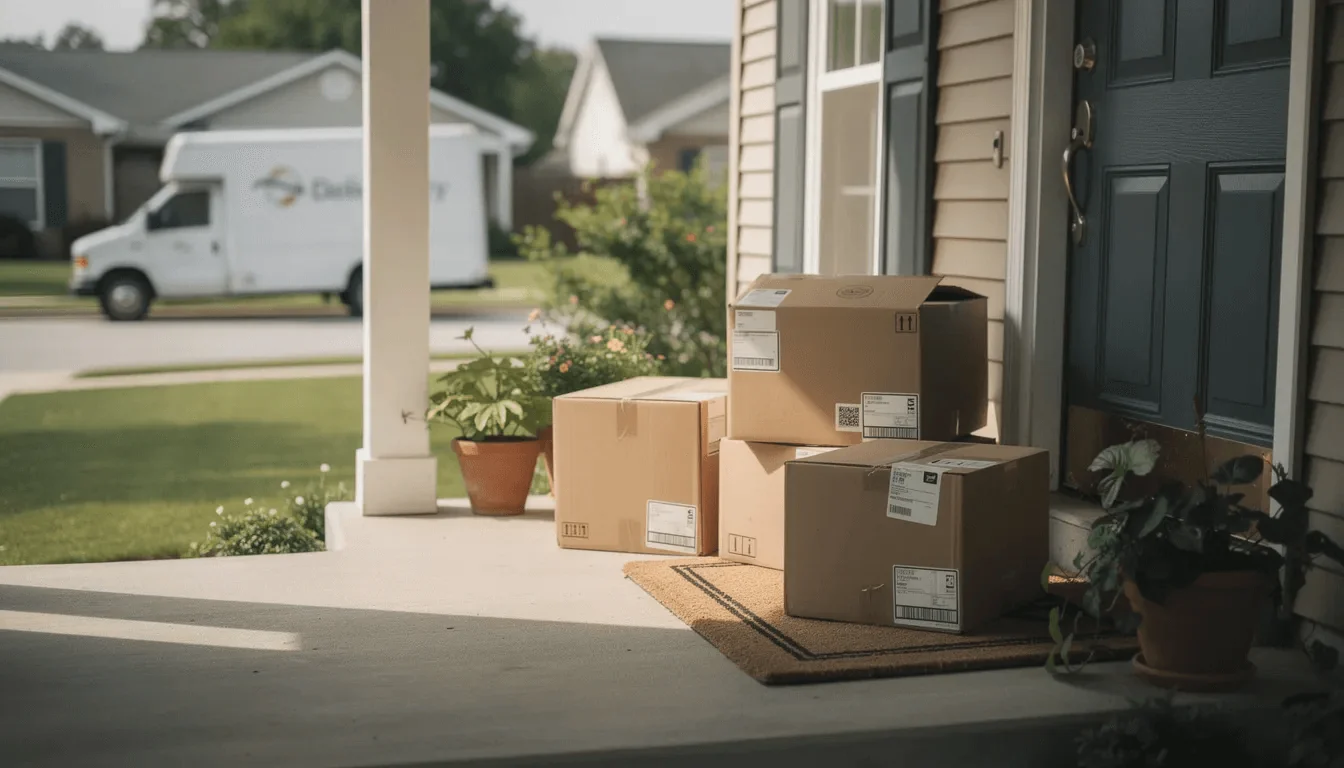
Porch piracy compounds the problem. Tens of millions of packages are stolen annually in the US from residential porches. Mid-to-high-value shipments—electronics, luxury accessories, specialty footwear—experience the greatest losses. Each theft results in a replacement shipment, potential chargeback, and diminished customer satisfaction and lifetime value.
Operational complexities add further friction: signature requirements for higher-value orders, adult signature for age-restricted products, and routing challenges in gated communities or remote neighborhoods all increase carrier labor costs and reduce delivery success rates.
Advantages of residential shipping include:
- Customer convenience of doorstep delivery without leaving home
- Emotional appeal and familiarity of “home delivery”
- Simplicity in checkout flows with fewer choices to confuse customers
- Suitability for bulky items that would be difficult to carry from a pickup point
Direct cost downsides are substantial:
- Higher per-parcel rates due to residential surcharges
- Longer route times per stop with no adjacent deliveries to share cost
- Inability to consolidate deliveries efficiently compared to dense commercial zones
- Extended area surcharges that can push total incremental cost above $8-10 per shipment in rural zones
Indirect costs often exceed the surcharges themselves:
Failed first-attempt deliveries represent a significant hidden cost. Industry data suggests 8-20% failure rates for residential scenarios, driven by recipients not being home, bad address data, building access restrictions, or inability to locate the address. Each failed attempt generates redelivery costs of $3-8 per attempt.
Porch piracy compounds the problem. Tens of millions of packages are stolen annually in the US from residential porches. Mid-to-high-value shipments—electronics, luxury accessories, specialty footwear—experience the greatest losses. Each theft results in a replacement shipment, potential chargeback, and diminished customer satisfaction and lifetime value.
Operational complexities add further friction: signature requirements for higher-value orders, adult signature for age-restricted products, and routing challenges in gated communities or remote neighborhoods all increase carrier labor costs and reduce delivery success rates.
Commercial Shipping: Operational Efficiencies and Margin Benefits
Commercial shipping refers to deliveries to offices, retail stores, warehouses, and staffed business locations during predictable business hours. This address type offers significant operational efficiency advantages that translate directly to your bottom line.
Direct cost advantages include:
First-attempt delivery success rates are markedly higher for commercial addresses. Industry benchmarks show >97% first-attempt success for staffed locations compared to 85-92% for residential in many markets. Staffed receiving desks, inventory rooms, and documented chains of custody reduce disputes about lost or stolen parcels.
A documented proof of delivery creates liability clarity that protects both the retailer and carrier. Barcode scans by receiving staff and signature logs provide objective, timestamped evidence of successful delivery—something residential theft or non-receipt claims often lack.
Limitations of pure commercial shipping include:
Direct cost advantages include:
- Lower or eliminated residential surcharges
- Better density of stops per route—20-50 packages consolidated to 2-3 stops versus one package per residential stop
- Shorter dwell times since receiving staff are prepared for deliveries
- Reduced fuel surcharge impact due to route efficiency
First-attempt delivery success rates are markedly higher for commercial addresses. Industry benchmarks show >97% first-attempt success for staffed locations compared to 85-92% for residential in many markets. Staffed receiving desks, inventory rooms, and documented chains of custody reduce disputes about lost or stolen parcels.
A documented proof of delivery creates liability clarity that protects both the retailer and carrier. Barcode scans by receiving staff and signature logs provide objective, timestamped evidence of successful delivery—something residential theft or non-receipt claims often lack.
Limitations of pure commercial shipping include:
- Not all customers have access to an office or business address
- Many workers now operate remotely several days per week
- Most DTC brands lack their own retail store networks to serve as pickup points
- B2B customers and corporate accounts can leverage commercial shipping, but B2C residential customers need alternatives
Alternative Delivery via a Network of Pickup Locations
A network of pickup locations includes convenience stores, supermarkets, lockers, and partner retail points where customers collect parcels at their convenience. This model represents a growing alternative delivery method that combines commercial shipping benefits with consumer flexibility.
The economics are straightforward: a carrier delivering to a single pickup location can consolidate 50-200 parcels into one or two stops, dramatically reducing per-parcel last-mile cost. Where residential delivery incurs the full weight of one-stop-one-parcel economics, pickup locations amortize that cost across many packages.
Via.Delivery operates a network of over 36,000 pickup locations across the US, integrating with common e-commerce platforms like Shopify and shipping tools like ShipStation. The platform dynamically shows nearby pickup locations at checkout, generates labels, and handles customer communication throughout the delivery process.
Cost advantages over residential shipping:
The economics are straightforward: a carrier delivering to a single pickup location can consolidate 50-200 parcels into one or two stops, dramatically reducing per-parcel last-mile cost. Where residential delivery incurs the full weight of one-stop-one-parcel economics, pickup locations amortize that cost across many packages.
Via.Delivery operates a network of over 36,000 pickup locations across the US, integrating with common e-commerce platforms like Shopify and shipping tools like ShipStation. The platform dynamically shows nearby pickup locations at checkout, generates labels, and handles customer communication throughout the delivery process.
Cost advantages over residential shipping:
- Carriers deliver many packages to a single staffed location
- Lower per-parcel last-mile cost (estimated $3-8 savings per parcel)
- Reduced redelivery attempts since customers actively retrieve parcels
- Simplified routing without residential address complications
- Theft is virtually eliminated—parcels are received by staff and held in secure locations
- Proof of delivery is clear—staff-verified pickups create accountability
- “Item not received” disputes drop dramatically
- Customer service overhead decreases as delivery success rates climb
- Extended hours provide multiple retrieval opportunities
- Ability to pick up near work or home based on daily schedule
- Discreet delivery for sensitive purchases
- Fewer missed deliveries and redelivery frustrations
Direct Cost Comparison: Residential vs. Commercial vs. Pickup Locations
Exact numbers vary by carrier and contract, but patterns remain consistent across North American parcel markets. Understanding the magnitude of these differences helps prioritize where to focus your optimization efforts.
Illustrative example: 3-5 lb parcel from central US fulfillment (2025-2026 rates)
Illustrative example: 3-5 lb parcel from central US fulfillment (2025-2026 rates)
| Delivery Type | Base Rate | Surcharges | Total Cost |
|---|---|---|---|
| Residential (UPS Ground) | $11.50 | $6.50 residential + $1.50 fuel + $1-2 DAS | $20.50-22.00 |
| Commercial (UPS Ground) | $11.50 | $1.50 fuel only | $13.00-13.50 |
| Pickup Location | $11.50 | $0.75 shared fuel | $12.25-13.00 |
The delta between residential and commercial is approximately $7-8.50 per package (33-40% savings). The delta between residential and pickup is approximately $7-9 per package (34-44% savings).
Volume compounding makes these differences substantial:
For a retailer shipping 100,000 parcels annually with a typical 95% residential mix:
To quantify your own opportunity, segment shipping spend reports by address type, service level, and zone. Most carrier invoices can be classified as residential, commercial, or business park. This data reveals where margin erosion is occurring and which customer segments are most economically problematic.
Volume compounding makes these differences substantial:
For a retailer shipping 100,000 parcels annually with a typical 95% residential mix:
- Current state: 95,000 × $20 + 5,000 × $13 = $1,965,000 annual shipping spend
- Optimized mix (60% residential, 20% commercial, 20% pickup): $1,550,000 annual shipping spend
- Annual savings: $415,000 (21% reduction)
To quantify your own opportunity, segment shipping spend reports by address type, service level, and zone. Most carrier invoices can be classified as residential, commercial, or business park. This data reveals where margin erosion is occurring and which customer segments are most economically problematic.
Impact on Delivery Success, Returns, and Customer Experience
Lower shipping costs only benefit your bottom line if they don’t erode delivery success and customer satisfaction. The good news: alternative delivery methods typically improve both metrics simultaneously.
Typical failure drivers for residential shipping:
Commercial destinations and pickup locations significantly increase first-attempt delivery success:
Fewer failed deliveries and lower theft translate into:
Research indicates many shoppers now prioritize reliability, clear customer communication, and flexible delivery options over pure speed. Pickup locations offer flexibility without requiring same day delivery service levels—acceptable to many consumers when shipping costs are transparent and lower.
Example scenario: A mid-market beauty brand added pickup-location delivery through Via.Delivery and tracked results over six months. “Item not received” support tickets dropped 42%, while repeat purchase rates increased 8%. The combination of cost savings and improved customer experience created compounding value across the entire supply chain.
Typical failure drivers for residential shipping:
- Recipient not home during delivery window
- Incorrect or incomplete address data
- Building access restrictions (apartments, gated communities)
- Porch theft after successful delivery scans
Commercial destinations and pickup locations significantly increase first-attempt delivery success:
- Residential: 80-92% first-attempt success in many markets
- Commercial: >97% first-attempt success
- Pickup locations: 95%+ success (customer-initiated retrieval)
Fewer failed deliveries and lower theft translate into:
- Lower return and reshipment costs
- Better reviews and higher net promoter scores
- Reduced customer support load
- Improved customer expectations alignment
Research indicates many shoppers now prioritize reliability, clear customer communication, and flexible delivery options over pure speed. Pickup locations offer flexibility without requiring same day delivery service levels—acceptable to many consumers when shipping costs are transparent and lower.
Example scenario: A mid-market beauty brand added pickup-location delivery through Via.Delivery and tracked results over six months. “Item not received” support tickets dropped 42%, while repeat purchase rates increased 8%. The combination of cost savings and improved customer experience created compounding value across the entire supply chain.
How Address Type Affects Conversion Rates and Checkout Behavior
Shipping options aren’t just operational decisions—they directly influence checkout conversion, cart abandonment, and average order value. High residential shipping fees suddenly visible at checkout trigger abandonment, especially for price-sensitive customers and lower-value orders.
When marketplaces or competitors offer lower-cost alternatives, customers defect. The performance gap between your shipping costs and customer expectations can make or break a sale.
Presenting options strategically can increase conversion:
Some retailers find that framing pickup-location shipping as “secure delivery” or “eco-friendly consolidated delivery” drives adoption beyond purely price-driven customers. The value proposition extends past cost savings to convenience and reliability.
A/B testing strategies to optimize checkout:
Data suggests transparent framing drives higher adoption than price-only messaging. Offering free or deeply discounted pickup versus expensive residential shipping outperforms offering discounted residential rates.
When marketplaces or competitors offer lower-cost alternatives, customers defect. The performance gap between your shipping costs and customer expectations can make or break a sale.
Presenting options strategically can increase conversion:
- A customer facing $22 residential shipping might abandon a $45 order
- Offered $13 pickup-location shipping, the same customer completes the purchase
- Result: higher conversion, lower cost per parcel, better margin per order
Some retailers find that framing pickup-location shipping as “secure delivery” or “eco-friendly consolidated delivery” drives adoption beyond purely price-driven customers. The value proposition extends past cost savings to convenience and reliability.
A/B testing strategies to optimize checkout:
- Test different default options (residential vs. pickup)
- Apply “Best value” or “Recommended” labels to pickup options
- Vary price deltas between residential and pickup
- Measure both conversion rate and chosen shipping method
Data suggests transparent framing drives higher adoption than price-only messaging. Offering free or deeply discounted pickup versus expensive residential shipping outperforms offering discounted residential rates.
Via.Delivery’s Role in Optimizing Shipping for Your Bottom Line
Via.Delivery serves as a B2B SaaS logistics technology partner for online retailers seeking to reduce costs while improving customer choice and security. The platform bridges the gap between e-commerce operations and the physical pickup network.
Platform integration capabilities:
Key features for merchants:
Configurable pricing rules enable flexible strategies:
Bottom-line benefits:
Platform integration capabilities:
- Prebuilt plugins for Shopify and APIs for custom platforms
- Real-time display of nearby pickup locations at checkout
- ShipStation integration for streamlined logistics software workflows
- Dynamic location recommendations based on customer address
Key features for merchants:
- Access to over 36,000 pickup locations across the US
- Automated label creation with correct routing
- Real time tracking links for customer visibility
- Proactive customer notifications throughout the delivery journey
- Reporting tools that segment shipments by delivery method
Configurable pricing rules enable flexible strategies:
- Share savings with customers through discounted pickup shipping
- Offer “free” pickup shipping funded by lower costs versus residential
- Maintain premium pricing for doorstep delivery convenience
- Test different price points to optimize conversion and margin
Bottom-line benefits:
- Lower shipping spend through reduced surcharges and improved route efficiency
- Fewer lost packages and associated replacement costs
- Lower support costs from reduced “where is my order?” contacts
- Ability to market “secure pickup” as a premium experience that costs less to operate
Implementation Roadmap: Shifting from Pure Residential to a Mixed Delivery Strategy
Most brands don’t need to abandon residential shipping—they need to rebalance toward more cost-effective methods. A phased implementation approach manages risk while capturing continuous improvement in shipping economics.
Step 1: Analyze current shipping data by address type
Segment 12-24 months of historical shipping spend by:
Step 2: Identify suitable segments for pickup delivery
Step 3: Define target adoption percentages
A realistic target might be 20-30% adoption of pickup-location delivery within 12 months, with remaining volume split between residential and commercial. This rebalances your mix while preserving convenience for customers who prioritize doorstep delivery.
Step 4: Integrate Via.Delivery
Technical integration through Shopify or ShipStation plugins typically completes in days. The longer timeline comes from internal preparation:
Step 5: Educate customers
Step 6: Measure and optimize
Track changes in:
Step 1: Analyze current shipping data by address type
Segment 12-24 months of historical shipping spend by:
- Residential vs. commercial address classification
- Carrier and service level
- Zone and geography
- Parcel weight and dimensions
- Redelivery and failure rates
- Associated costs (surcharges, failed attempts, replacements)
Step 2: Identify suitable segments for pickup delivery
- Products under common size/weight limits
- Non-perishable goods without temperature requirements
- Customer segments showing price sensitivity at checkout
- Geographies with strong pickup location density
Step 3: Define target adoption percentages
A realistic target might be 20-30% adoption of pickup-location delivery within 12 months, with remaining volume split between residential and commercial. This rebalances your mix while preserving convenience for customers who prioritize doorstep delivery.
Step 4: Integrate Via.Delivery
Technical integration through Shopify or ShipStation plugins typically completes in days. The longer timeline comes from internal preparation:
- Updating shipping policies and checkout messaging
- Comprehensive training for support teams
- Creating FAQ content explaining the new option
- Ensuring warehouse workflows correctly identify pickup-location consignments
Step 5: Educate customers
- On-site messaging highlighting benefits of secure pickup
- Post-purchase flows explaining how pickup works
- Email campaigns promoting the new option to existing customers
- Clear instructions for returns at pickup locations
Step 6: Measure and optimize
Track changes in:
- Shipping cost per order
- First-attempt delivery success rates
- “Item not received” complaints
- Checkout conversion rate
- Chosen shipping methods by customer segment
Financial Modeling: Estimating the Bottom-Line Impact
Finance and operations leaders need a simple way to quantify the value of shifting part of their shipping mix away from residential deliveries. A straightforward model using your own data can demonstrate the business case.
Baseline model assumptions for a 100,000 parcel/year retailer:
Scenario: 25-40% pickup adoption
Shifting 25-40% of annual volume to pickup locations while maintaining 5% commercial and reducing residential to 55-70% yields:
Baseline model assumptions for a 100,000 parcel/year retailer:
- 95% residential baseline (average $20 per parcel)
- 5% commercial baseline (average $13 per parcel)
- 12% first-attempt failure rate (costing ~$4 per failed attempt)
- 2% porch theft rate (costing ~$22 per parcel in replacement and chargeback)
Scenario: 25-40% pickup adoption
Shifting 25-40% of annual volume to pickup locations while maintaining 5% commercial and reducing residential to 55-70% yields:
| Metric | Current State | Optimized Mix |
|---|---|---|
| Average shipping cost/parcel | $19.35 | $15.50-16.00 |
| Annual shipping spend | $1,935,000 | $1,550,000-1,600,000 |
| Failed delivery costs | $48,000 | $24,000 |
| Theft-related costs | $44,000 | $4,400 |
| Support cost reduction | -- | $10,000-15,000 |
Total annual benefit: ~$400,000-450,000 (20-23% improvement)
Intangible but real financial effects:
Collaborate with Via.Delivery or internal analysts to build a tailored model using your own 12-24 month shipping and support data. The investment in analysis pays dividends in strategic clarity.
Intangible but real financial effects:
- Improved delivery reliability increases repeat purchase rates by 5-10%
- Higher repeat rates improve customer lifetime value
- Reduced refund and dispute rates improve cash flow
- Lower chargeback fees (typically 1-3% of disputed transaction value)
Collaborate with Via.Delivery or internal analysts to build a tailored model using your own 12-24 month shipping and support data. The investment in analysis pays dividends in strategic clarity.
FAQ
These questions address practical concerns not fully covered in the main sections, focusing on implementation and edge cases that businesses frequently encounter.
Is commercial shipping always cheaper than residential shipping?
In most carrier pricing structures, commercial delivery either avoids or significantly reduces residential surcharges, making it cheaper on a per-package basis for similar zones and weights. However, exceptions exist: heavily discounted residential contracts or special promotional rates can narrow the gap.
The critical point is that operational costs—failed attempts, theft, redelivery—still tend to be higher for home delivery regardless of negotiated rates. Retailers should compare at least 6-12 months of invoice data segmented by address type to see their actual cost differential before making strategic decisions.
The critical point is that operational costs—failed attempts, theft, redelivery—still tend to be higher for home delivery regardless of negotiated rates. Retailers should compare at least 6-12 months of invoice data segmented by address type to see their actual cost differential before making strategic decisions.
What kinds of products work best with pickup-location delivery networks?
Products well-suited to pickup locations include small-to-medium parcels under common size/weight limits, non-perishable goods, and items customers don’t need urgently the same day.
Higher-value or theft-prone categories—electronics, luxury accessories, specialty footwear, beauty devices—often see the greatest benefit from secure pickup because they experience more loss in residential delivery.
Categories that may be less suitable include very bulky items, heavy furniture requiring special handling, and products with strict temperature control requirements. The range of suitable products is broader than many retailers initially assume.
Higher-value or theft-prone categories—electronics, luxury accessories, specialty footwear, beauty devices—often see the greatest benefit from secure pickup because they experience more loss in residential delivery.
Categories that may be less suitable include very bulky items, heavy furniture requiring special handling, and products with strict temperature control requirements. The range of suitable products is broader than many retailers initially assume.
Will offering pickup locations at checkout confuse customers or hurt conversion?
When implemented clearly—showing a simple live map, distance, opening hours —pickup choices typically increase, not decrease, conversion. The key is limiting visible options to a small number of nearby pickup points rather than overwhelming shoppers.
Retailers should A/B test: one version with only residential shipping versus another with both residential and pickup options. Measure changes in checkout completion and chosen shipping methods to achieve data-driven decisions.
Retailers should A/B test: one version with only residential shipping versus another with both residential and pickup options. Measure changes in checkout completion and chosen shipping methods to achieve data-driven decisions.
How quickly can a retailer start using a network of pickup locations like Via.Delivery?
Many merchants on platforms like Shopify or using tools like ShipStation can complete basic technical integration with Via.Delivery in days, not months, thanks to prebuilt plugins and APIs. The resources required are minimal from a technical standpoint.
The longer timeline usually comes from internal tasks: updating shipping policies, comprehensive training for support teams, and creating site content explaining the new delivery option. Planning a pilot phase of 60-90 days with a subset of customers or geographies validates performance before full rollout.
The longer timeline usually comes from internal tasks: updating shipping policies, comprehensive training for support teams, and creating site content explaining the new delivery option. Planning a pilot phase of 60-90 days with a subset of customers or geographies validates performance before full rollout.
Does using pickup locations limit my carrier choices?
Via.Delivery is designed to work alongside the carriers a retailer already uses, not necessarily replace them. The platform routes eligible parcels to pickup points while leaving other traffic unchanged. In many cases, merchants maintain their existing contracts and service levels while adding pickup-location routing as a complementary layer.
Discuss carrier implications with Via.Delivery during onboarding so any necessary routing or service adjustments can serve your specific strategy. The implementation should enhance rather than constrain your logistics operations.
Discuss carrier implications with Via.Delivery during onboarding so any necessary routing or service adjustments can serve your specific strategy. The implementation should enhance rather than constrain your logistics operations.
Not ready for a call?
Get the Via.Delivery Shipping Brief: short reads on carrier fees, holiday cutoffs and pickup options for online stores and wineries, twice a month.
No spam. Unsubscribe anytime.