





How PUDO Networks Eliminate Dimensional Weight Penalties
Published
Key Takeaways
- Dimensional weight pricing is one of the primary reasons ecommerce merchants encounter unexpected carrier surcharges in 2024, with DIM charges often comprising 20-40% of total shipping spend for bulky product categories.
- Consolidating parcels into dense, commercial PUDO (pick-up and drop-off) networks dramatically reduces the impact of dim weight compared to traditional residential delivery by improving carrier vehicle utilization and eliminating residential surcharges.
- Via.Delivery’s nationwide network of 36,000+ pickup locations in the U.S. enables merchants to avoid many of the worst dimensional weight charges by shipping to commercial addresses and leveraging consolidated volume pricing.
- This article walks through current carrier DIM rules for UPS, FedEx, and USPS in 2024, provides numeric examples of how DIM impacts your margins, and explains how PUDO networks fundamentally change the cost structure.
- You’ll leave with a practical playbook to cut DIM penalties without completely redesigning your products or packaging.
Share:
Introduction: DIM Weight Is Eating Your Margin
For many DTC brands in 2024, shipping costs account for 50-70% of total fulfillment expenses. That’s a staggering share of your operational budget flowing directly to carriers. What makes this even more painful is that dimensional weight surcharges now claim 20-40% of that spend for merchants selling lightweight but bulky categories like bedding, outerwear, pet supplies, and home décor.
Here’s the core problem: shipping carriers charge for the space a package occupies in their vehicles, not just how heavy it is. This pricing method punishes lightweight but bulky cartons, turning a 5 lb pillow into a 15 lb billing nightmare. The concept is straightforward, but the financial impact is anything but.
This trend accelerated after 2015 when UPS and FedEx expanded dim weight pricing to nearly all ground parcels. USPS followed in 2019 by lowering its dimensional factor from 194 to 166 for Priority Mail shipments over 1 cubic foot going to Zones 5-9. The era of “light package, cheap shipping” effectively ended.
The conventional response has been to fight DIM with thinner boxes, less padding, and vacuum-sealed packaging. But there’s a structural alternative that many merchants overlook: changing the delivery model itself. By shipping to PUDO networks—dense grids of pickup locations like those operated by Via.Delivery—merchants can sidestep much of the DIM penalty while improving customer satisfaction.
The rest of this article will first explain how to calculate dimensional weight, then show exactly how pickup networks reduce DIM exposure and total delivered cost.
Here’s the core problem: shipping carriers charge for the space a package occupies in their vehicles, not just how heavy it is. This pricing method punishes lightweight but bulky cartons, turning a 5 lb pillow into a 15 lb billing nightmare. The concept is straightforward, but the financial impact is anything but.
This trend accelerated after 2015 when UPS and FedEx expanded dim weight pricing to nearly all ground parcels. USPS followed in 2019 by lowering its dimensional factor from 194 to 166 for Priority Mail shipments over 1 cubic foot going to Zones 5-9. The era of “light package, cheap shipping” effectively ended.
The conventional response has been to fight DIM with thinner boxes, less padding, and vacuum-sealed packaging. But there’s a structural alternative that many merchants overlook: changing the delivery model itself. By shipping to PUDO networks—dense grids of pickup locations like those operated by Via.Delivery—merchants can sidestep much of the DIM penalty while improving customer satisfaction.
The rest of this article will first explain how to calculate dimensional weight, then show exactly how pickup networks reduce DIM exposure and total delivered cost.
What Is Dimensional Weight (DIM) and Why Carriers Love It
Dimensional weight, also called volumetric weight, is a pricing technique that converts the volume a package occupies into a theoretical weight used to calculate shipping charges. Think of it as carriers charging you for the air inside your box.
The standard formula for calculating dim weight in pounds for domestic shipments is:
DIM Weight (lbs) = (Length × Width × Height in inches) ÷ DIM Factor
The dimensional factor is carrier-specific and gets updated periodically. For 2024, most major shipping carriers use factors between 139 and 166, depending on the service and account type.
Here’s the critical point: the billable weight is always whichever is greater—actual weight or DIM weight. A 4 lb pillow shipped in a large box might be billed at 14 or 18 lbs depending on the dimensions and the carrier’s dim factor. You pay for space, not just mass.
Why do shipping companies like UPS, FedEx, and USPS embrace this approach? Because their trucks and aircraft “cube out” before they “weigh out.” Vehicles reach capacity by volume before weight limits. Pricing by space ensures carriers get paid appropriately for low-density freight that would otherwise fill their vehicles with light packages that generate minimal revenue.
Large 3PLs sometimes negotiate better DIM factors through volume commitments. But most SMB merchants using standard accounts or ecommerce platforms pay the full 2024 DIM schedules, making them especially vulnerable to these charges.
The standard formula for calculating dim weight in pounds for domestic shipments is:
DIM Weight (lbs) = (Length × Width × Height in inches) ÷ DIM Factor
The dimensional factor is carrier-specific and gets updated periodically. For 2024, most major shipping carriers use factors between 139 and 166, depending on the service and account type.
Here’s the critical point: the billable weight is always whichever is greater—actual weight or DIM weight. A 4 lb pillow shipped in a large box might be billed at 14 or 18 lbs depending on the dimensions and the carrier’s dim factor. You pay for space, not just mass.
Why do shipping companies like UPS, FedEx, and USPS embrace this approach? Because their trucks and aircraft “cube out” before they “weigh out.” Vehicles reach capacity by volume before weight limits. Pricing by space ensures carriers get paid appropriately for low-density freight that would otherwise fill their vehicles with light packages that generate minimal revenue.
Large 3PLs sometimes negotiate better DIM factors through volume commitments. But most SMB merchants using standard accounts or ecommerce platforms pay the full 2024 DIM schedules, making them especially vulnerable to these charges.
Current DIM Rules in 2024: UPS, FedEx, and USPS
Understanding the actual 2024 DIM rules is crucial before exploring how PUDO networks change the equation. Different shipping carriers apply slightly different dimensional factors and thresholds, which means the same package can be billed at different weights depending on the service and destination zone.
All examples in this section use inches and pounds to mirror how most U.S. ecommerce shippers quote retail rates and daily rates.
All examples in this section use inches and pounds to mirror how most U.S. ecommerce shippers quote retail rates and daily rates.
| Carrier | DIM Factor (Standard) | DIM Factor (Retail/Counter) | Applies To |
|---|---|---|---|
| UPS | 139 | 166 | Most domestic ground and air |
| FedEx | 139 | 139 | Express and Ground |
| USPS | 166 | 166 | Priority Mail over 1 cu ft, Zones 5-9 |
UPS Dimensional Weight in 2024
UPS uses two main DIM factors in the U.S.: 139 for “Daily Rates” (contracted business accounts) and 166 for “Retail Rates” (counter shipments and low-volume shippers).
Let’s work through an example. Consider a box measuring 20 × 16 × 12 inches:
Interestingly, merchants with negotiated daily rates get a lower divisor (139), which paradoxically increases billed DIM weight compared to retail rates (166). However, overall shipping costs may be offset by volume discounts on the rate per pound.
UPS applies dimensional weight pricing to most domestic shipments, with package limits of 150 lbs maximum actual weight and 108 inches on the longest side. For DTC brands shipping to residential addresses in Zones 5-8, UPS Ground billed weight is frequently driven by DIM rather than the actual package weight.
Let’s work through an example. Consider a box measuring 20 × 16 × 12 inches:
- Volume: 20 × 16 × 12 = 3,840 cubic inches
- DIM weight at factor 139: 3,840 ÷ 139 = 27.6 lbs (rounded to 28 lbs)
- DIM weight at factor 166: 3,840 ÷ 166 = 23.1 lbs (rounded to 24 lbs)
Interestingly, merchants with negotiated daily rates get a lower divisor (139), which paradoxically increases billed DIM weight compared to retail rates (166). However, overall shipping costs may be offset by volume discounts on the rate per pound.
UPS applies dimensional weight pricing to most domestic shipments, with package limits of 150 lbs maximum actual weight and 108 inches on the longest side. For DTC brands shipping to residential addresses in Zones 5-8, UPS Ground billed weight is frequently driven by DIM rather than the actual package weight.
FedEx Dimensional Weight in 2024
FedEx Express and FedEx Ground in the U.S. use a carrier’s dim factor of 139 for inches/pounds (and 5,000 for centimeters/kilograms), unchanged since 2017.
Here’s a distinct example: a 22 × 14 × 10 inch carton:
Even if your product only weighs 8 lbs actual weight, you’re billed for 23 lbs. That’s nearly triple the transportation cost you might expect.
FedEx maintains typical parcel limits of 150 lbs and size constraints of 119 inches in length and 165 inches in length plus girth. A key update for 2025 (effective August 18) rounds any fractional inch up to the nearest whole number, potentially increasing DIM weight by 10-14% for imprecisely measured packages.
With a relatively aggressive dim factor of 139, FedEx is particularly tough on low-density products like pillows, apparel in oversized packaging, and bulky items for home décor.
Here’s a distinct example: a 22 × 14 × 10 inch carton:
- Volume: 22 × 14 × 10 = 3,080 cubic inches
- DIM weight at factor 139: 3,080 ÷ 139 = 22.2 lbs (rounded to 23 lbs)
Even if your product only weighs 8 lbs actual weight, you’re billed for 23 lbs. That’s nearly triple the transportation cost you might expect.
FedEx maintains typical parcel limits of 150 lbs and size constraints of 119 inches in length and 165 inches in length plus girth. A key update for 2025 (effective August 18) rounds any fractional inch up to the nearest whole number, potentially increasing DIM weight by 10-14% for imprecisely measured packages.
With a relatively aggressive dim factor of 139, FedEx is particularly tough on low-density products like pillows, apparel in oversized packaging, and bulky items for home décor.
USPS Dimensional Weight in 2024
USPS adopted a dim factor of 166 in 2019 for Priority Mail and Priority Mail Express parcels exceeding 1 cubic foot (1,728 cubic inches) shipped to Zones 5-9.
Consider an 18 × 12 × 10 inch parcel shipped from New York to California (Zone 8):
Even if the actual weight is just 5 lbs, you’re billed at 13 lbs—more than double what the scale shows.
USPS caps actual package weight at 70 lbs. Flat-rate packaging avoids DIM entirely but often doesn’t work for oddly shaped or bulky ecommerce products. USPS used to be the default “cheapest” option for bulky items, but expanded DIM rules and annual rate increases have narrowed that advantage significantly.
Consider an 18 × 12 × 10 inch parcel shipped from New York to California (Zone 8):
- Volume: 18 × 12 × 10 = 2,160 cubic inches
- DIM weight at factor 166: 2,160 ÷ 166 = 13.0 lbs (rounded to 13 lbs)
Even if the actual weight is just 5 lbs, you’re billed at 13 lbs—more than double what the scale shows.
USPS caps actual package weight at 70 lbs. Flat-rate packaging avoids DIM entirely but often doesn’t work for oddly shaped or bulky ecommerce products. USPS used to be the default “cheapest” option for bulky items, but expanded DIM rules and annual rate increases have narrowed that advantage significantly.
How DIM Penalties Show Up on Your P&L
Let’s connect DIM mechanics to real ecommerce financial impact. For a small DTC brand selling bedding, outerwear, or pet supplies, 20-40% of shipping spend can be tied to dimensional weight charges rather than base transportation cost.
Imagine this margin example:
Imagine this margin example:
| Line Item | Amount |
|---|---|
| Retail price | $90 |
| Cost of goods | $30 |
| Shipping (actual weight, 5 lbs) | ~$15 |
| Shipping (DIM weight, 19 lbs, Zone 8) | $38-57 |
| Residential surcharge | $5-6 |
| Delivery area surcharge (DAS) | $3 |
| Total shipping (DIM scenario) | $46-66 |
In the DIM scenario, your shipping cost alone nearly equals or exceeds your COGS. Margins erode to near zero, and you haven’t even accounted for returns or customer acquisition costs.
Because dimensional weight charges vary by box cubic size and destination zone, many merchants struggle to forecast exact shipping costs at checkout. This leads to either under-charging customers (killing margins) or displaying rates so high they trigger cart abandonment.
The typical response is shrinking boxes and reducing padding. But there’s a structural alternative: shipping in a way that carriers reward with more favorable pricing—consolidated, commercial-destination PUDO networks.
Because dimensional weight charges vary by box cubic size and destination zone, many merchants struggle to forecast exact shipping costs at checkout. This leads to either under-charging customers (killing margins) or displaying rates so high they trigger cart abandonment.
The typical response is shrinking boxes and reducing padding. But there’s a structural alternative: shipping in a way that carriers reward with more favorable pricing—consolidated, commercial-destination PUDO networks.
Traditional Tactics to Reduce DIM (and Their Limits)
Before exploring PUDO, let’s acknowledge the common best practices for fighting DIM:
These tactics work. Experts cite 15-30% packaging savings from corrugate-on-demand systems, and one case study from Staci Americas showed 20% shipping cost reduction through optimized packaging.
However, these approaches have diminishing returns. Once your packaging is reasonably tight, you’re limited by the physical volume of the product itself. You can’t vacuum-pack a lamp. You can’t compress a pet bed beyond a certain point without damaging it.
There’s also risk: changing packaging can increase damage rates and WISMO (“where is my order”) issues. A 10% rise in damage claims can offset the DIM savings through returns, reships, and customer service costs.
The structural alternative? Change the delivery pattern instead of just the package. Moving from dispersed residential shipments to consolidated commercial volumes via pickup locations unlocks a different class of savings.
- Right-sizing packaging: Using multi-depth boxes or custom-fit mailers that minimize void space
- Lightweight materials: Switching to thinner corrugate or poly mailers where product protection allows
- Vacuum-packing textiles: Compressing apparel, bedding, and soft goods to reduce the cubic size
- SIOC designs: “Ship in own container” packaging where the product box is the shipping box
- On-demand box makers: Systems like Packsize that create custom-fit boxes for each order
These tactics work. Experts cite 15-30% packaging savings from corrugate-on-demand systems, and one case study from Staci Americas showed 20% shipping cost reduction through optimized packaging.
However, these approaches have diminishing returns. Once your packaging is reasonably tight, you’re limited by the physical volume of the product itself. You can’t vacuum-pack a lamp. You can’t compress a pet bed beyond a certain point without damaging it.
There’s also risk: changing packaging can increase damage rates and WISMO (“where is my order”) issues. A 10% rise in damage claims can offset the DIM savings through returns, reships, and customer service costs.
The structural alternative? Change the delivery pattern instead of just the package. Moving from dispersed residential shipments to consolidated commercial volumes via pickup locations unlocks a different class of savings.
Why PUDO Networks Change the DIM Equation
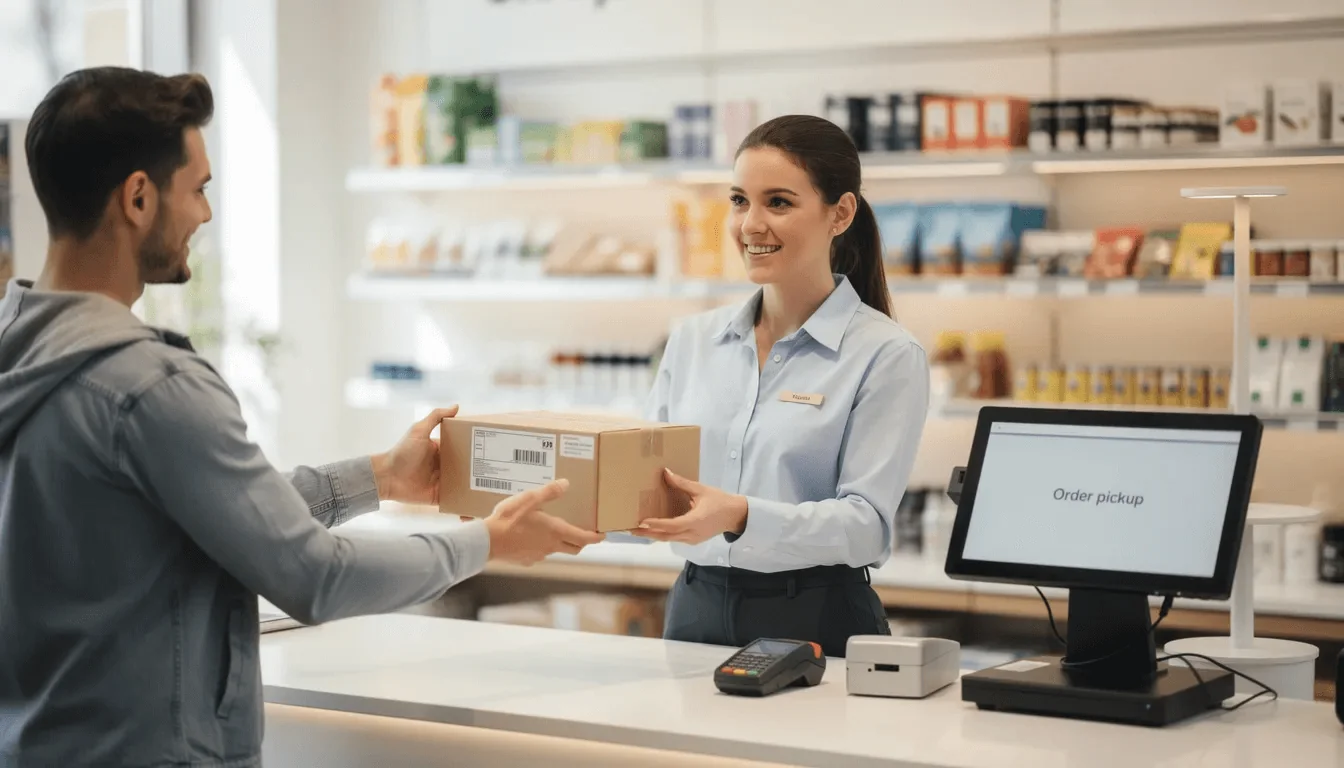
PUDO (pick-up and drop-off) networks are dense grids of staffed retail locations—convenience stores, pharmacies, parcel shops, lockers—where customers collect or return parcels instead of receiving them at home.
PUDO shipments are operationally different for carriers. Instead of delivering one package to one doorstep, a driver delivers dozens or hundreds of parcels to a single commercial address. This fundamentally changes the economics of last mile delivery.
Three structural advantages of PUDO over traditional residential delivery:
These operational efficiencies allow carriers and network operators to structure pricing that is less sensitive to DIM penalties. The logistics math simply works better when you’re not chasing individual doorsteps across residential neighborhoods dealing with traffic congestion and failed attempts.
Via.Delivery operates one of the largest independent pickup networks in the U.S., with 36,000+ commercial locations integrated via APIs and plugins into leading ecommerce platforms like Shopify and ShipStation.
PUDO shipments are operationally different for carriers. Instead of delivering one package to one doorstep, a driver delivers dozens or hundreds of parcels to a single commercial address. This fundamentally changes the economics of last mile delivery.
Three structural advantages of PUDO over traditional residential delivery:
- Better vehicle cube utilization: Carriers can stack boxes tightly when delivering to commercial locations, averaging out the “air” in individual packages across the entire load
- Fewer delivery attempts: No missed deliveries, no reattempt fees, no return-to-sender charges
- Lower last mile costs per package: Fewer stops, shorter routes, predictable delivery windows
These operational efficiencies allow carriers and network operators to structure pricing that is less sensitive to DIM penalties. The logistics math simply works better when you’re not chasing individual doorsteps across residential neighborhoods dealing with traffic congestion and failed attempts.
Via.Delivery operates one of the largest independent pickup networks in the U.S., with 36,000+ commercial locations integrated via APIs and plugins into leading ecommerce platforms like Shopify and ShipStation.
Higher Density, Lower Effective DIM
When a truck delivers 80 parcels to a single pickup location instead of 80 residential doorsteps, the carrier loads vehicles more efficiently. Boxes get stacked tightly, and the “air” inside individual packages gets averaged across the entire delivery run.
This consolidation allows network operators like Via.Delivery to negotiate different rate structures with carriers. Individual merchants see lower effective cost per DIM pound than they would shipping one-off residential parcels.
Here’s a simplified numeric example:
This consolidation allows network operators like Via.Delivery to negotiate different rate structures with carriers. Individual merchants see lower effective cost per DIM pound than they would shipping one-off residential parcels.
Here’s a simplified numeric example:
| Scenario | Parcels | Stops | Approx. Cost per Parcel |
|---|---|---|---|
| Residential (individual) | 50 | 50 | $25-35 |
| PUDO (consolidated to 5 locations) | 50 | 5 | $18-25 |
The official dim factor (139 or 166) doesn’t magically disappear. But the blended rate a merchant pays through a PUDO partner behaves as though the dim factor were higher or the billed weight lower. The efficiency gains get passed back as lower fees.
Commercial Addresses vs. Residential Surcharges
Most major carriers apply per-package residential surcharges ($4-6) and additional delivery area surcharges (DAS) for remote or low-density ZIP codes. These fees stack on top of dimensional weight charges.
PUDO locations are commercial addresses—local shops, grocery stores, parcel outlets—typically in higher-density zones where carriers already run regular routes. By shipping to these pickup locations, merchants avoid or reduce:
Before/After Comparison (Same 5 lb/19 DIM lb Jacket to Zone 8):
PUDO locations are commercial addresses—local shops, grocery stores, parcel outlets—typically in higher-density zones where carriers already run regular routes. By shipping to these pickup locations, merchants avoid or reduce:
- Residential surcharges ($4-6 per package)
- Delivery area surcharges ($3+ for remote ZIPs)
- Failed delivery fees (reattempt charges, relabeling)
Before/After Comparison (Same 5 lb/19 DIM lb Jacket to Zone 8):
| Cost Component | Residential Direct | Via.Delivery Pickup |
|---|---|---|
| Base shipping (DIM) | $50-55 | $35-40 |
| Residential surcharge | $5 | $0 |
| DAS | $3 | $0 |
| Total | $58-63 | $35-40 |
That’s a 30-40% reduction in total shipping cost for the same product.
Customer Behavior: Fewer Failed Deliveries, Less Waste
Failed first-attempt deliveries drive extra miles, reattempt fees, and re-labeling charges. Studies suggest 10-20% of residential delivery attempts fail initially, triggering costly reattempts that amplify the impact of DIM-weighted parcels.
PUDO networks eliminate missed deliveries. Parcels wait securely at the pickup location until customers retrieve them on their own schedule. This predictability benefits both merchants and shoppers.
Fewer reattempts and returns mean merchants can use slightly tighter packaging without as much fear of damage or theft. Over time, this indirectly reduces dimensional footprint.
For customers, PUDO addresses real pain points: porch piracy, missed deliveries while at work, and the uncertainty of “will it arrive today?” The result is higher customer satisfaction and customer expectations being consistently met.
PUDO networks eliminate missed deliveries. Parcels wait securely at the pickup location until customers retrieve them on their own schedule. This predictability benefits both merchants and shoppers.
Fewer reattempts and returns mean merchants can use slightly tighter packaging without as much fear of damage or theft. Over time, this indirectly reduces dimensional footprint.
For customers, PUDO addresses real pain points: porch piracy, missed deliveries while at work, and the uncertainty of “will it arrive today?” The result is higher customer satisfaction and customer expectations being consistently met.
How Via.Delivery Uses PUDO to Reduce DIM Costs for Merchants
Via.Delivery is a logistics technology provider focused on enabling e-commerce retailers to ship orders to a large network of alternative pickup locations instead of residential addresses.
The platform integrates through plugins for Shopify and connections to ShipStation, allowing merchants to activate pickup shipping options at checkout without rewriting their entire fulfillment stack. From distribution centers to customer hands, the supply chain stays streamlined.
Via.Delivery negotiates carrier contracts based on consolidated volumes flowing into its pickup network. Merchants access more favorable rate structures than they could achieve individually—particularly valuable for DIM-heavy products where standard carrier pricing is punitive.
The platform integrates through plugins for Shopify and connections to ShipStation, allowing merchants to activate pickup shipping options at checkout without rewriting their entire fulfillment stack. From distribution centers to customer hands, the supply chain stays streamlined.
Via.Delivery negotiates carrier contracts based on consolidated volumes flowing into its pickup network. Merchants access more favorable rate structures than they could achieve individually—particularly valuable for DIM-heavy products where standard carrier pricing is punitive.
Network of 36,000+ Pickup Locations
Via.Delivery’s network spans more than 36,000 staffed pickup points across the United States, including convenience stores, independent retailers, and other commercial venues.
This density means most U.S. online shoppers can find a Via.Delivery pickup location within a few miles of their home or workplace. Pickup becomes a practical alternative to residential delivery, not just a fallback option.
Dense coverage allows Via.Delivery to consolidate parcels from many different merchants into the same locations. Higher per-stop volume supports better negotiated rates with carriers. This consolidation is especially powerful for categories heavily impacted by weight pricing:
This density means most U.S. online shoppers can find a Via.Delivery pickup location within a few miles of their home or workplace. Pickup becomes a practical alternative to residential delivery, not just a fallback option.
Dense coverage allows Via.Delivery to consolidate parcels from many different merchants into the same locations. Higher per-stop volume supports better negotiated rates with carriers. This consolidation is especially powerful for categories heavily impacted by weight pricing:
- Apparel bundles and outerwear
- Bedding and linens
- Sports equipment
- Pet beds and supplies
- Small furniture and home décor
Checkout and Fulfillment Integrations
Via.Delivery offers ready-made checkout widgets for popular ecommerce platforms. Shopify merchants can enable a map or list view where shoppers select a nearby pickup location at checkout—no custom development required.
Merchants using ShipStation or similar shipping software generate Via.Delivery labels alongside existing carrier labels, minimizing operational changes in the warehouse. The parcel flows through normal fulfillment, just with a different destination.
For custom-built ecommerce sites or ERPs, Via.Delivery’s APIs embed pickup selection and label generation directly into existing order flows. By routing orders through Via.Delivery’s network, merchants tap into pricing structures that are less punishing on dimensional weight without modifying their own carrier contracts.
Merchants using ShipStation or similar shipping software generate Via.Delivery labels alongside existing carrier labels, minimizing operational changes in the warehouse. The parcel flows through normal fulfillment, just with a different destination.
For custom-built ecommerce sites or ERPs, Via.Delivery’s APIs embed pickup selection and label generation directly into existing order flows. By routing orders through Via.Delivery’s network, merchants tap into pricing structures that are less punishing on dimensional weight without modifying their own carrier contracts.
Tracking, Notifications, and Customer Experience
Via.Delivery provides branded tracking pages and automated email/SMS notifications. Customers know exactly when their parcel arrives at the pickup location and when the hold period is nearing its end.
Clear communication reduces WISMO contacts and keeps customers comfortable with pickup even for larger packages. This gives merchants more flexibility in packaging choices.
Pickup locations typically maintain extended hours—evenings and weekends—making retrieval more convenient than waiting at home for a driver. Working professionals and urban shoppers particularly appreciate this flexibility.
Sample Customer Journey:
Clear communication reduces WISMO contacts and keeps customers comfortable with pickup even for larger packages. This gives merchants more flexibility in packaging choices.
Pickup locations typically maintain extended hours—evenings and weekends—making retrieval more convenient than waiting at home for a driver. Working professionals and urban shoppers particularly appreciate this flexibility.
Sample Customer Journey:
- At checkout, customer selects a nearby Via.Delivery pickup point from an interactive map
- Order ships normally from merchant’s warehouse
- Customer receives SMS when package arrives at the retail store
- Customer visits during convenient hours, shows ID or scans code
- Package retrieved—no porch piracy, no missed delivery
Quantifying the Savings: DIM Example with and without PUDO
Let’s walk through a concrete dimensional weight calculation comparing residential delivery to PUDO.
Sample Product: 5 lb winter jacket Box Dimensions: 20 × 16 × 8 inches Volume: 2,560 cubic inches
Route: Chicago to Los Angeles (Zone 8) Carrier’s DIM Factor: 139 (FedEx)
DIM Weight Calculation: 2,560 ÷ 139 = 18.4 lbs → rounded to 19 lbs billable weight
Sample Product: 5 lb winter jacket Box Dimensions: 20 × 16 × 8 inches Volume: 2,560 cubic inches
Route: Chicago to Los Angeles (Zone 8) Carrier’s DIM Factor: 139 (FedEx)
DIM Weight Calculation: 2,560 ÷ 139 = 18.4 lbs → rounded to 19 lbs billable weight
| Delivery Method | Base Rate (19 DIM lbs) | Residential Surcharge | DAS | Total |
|---|---|---|---|---|
| FedEx to Home | ~$48 | $6 | $3 | $57 |
| Via.Delivery Pickup | ~$38 | $0 | $0 | $38 |
Savings: $19 per package (33%)
The dimensional weight formula remains identical. The package’s length width and height don’t change. But the effective price per billed pound drops significantly because:
For a merchant shipping 500 such jackets monthly, that’s $9,500 in monthly savings—over $114,000 annually.
The dimensional weight formula remains identical. The package’s length width and height don’t change. But the effective price per billed pound drops significantly because:
- Commercial address eliminates residential surcharge
- Dense delivery zone avoids DAS
- Consolidated network pricing reduces base transportation cost
For a merchant shipping 500 such jackets monthly, that’s $9,500 in monthly savings—over $114,000 annually.
FAQ
The following questions address practical concerns about implementing PUDO networks for DIM cost reduction.
Will using a PUDO network completely eliminate dimensional weight charges?
PUDO does not remove DIM formulas from carrier pricing. Carriers still calculate dimensional weight using their standard dimensional factor, and the billable weight remains whichever is greater between actual weight and DIM weight.
However, PUDO significantly reduces the effective cost per DIM pound through consolidation and commercial delivery pricing. Merchants see the biggest benefits on oversized but lightweight products where base transportation costs and surcharges combine to make residential delivery expensive.
For maximum impact, combine PUDO with sensible right-sizing of packaging. The two strategies complement each other.
However, PUDO significantly reduces the effective cost per DIM pound through consolidation and commercial delivery pricing. Merchants see the biggest benefits on oversized but lightweight products where base transportation costs and surcharges combine to make residential delivery expensive.
For maximum impact, combine PUDO with sensible right-sizing of packaging. The two strategies complement each other.
How do customers react to picking up parcels instead of home delivery?
Customer acceptance varies by market, but urban and suburban shoppers increasingly prefer pickup. It eliminates missed deliveries, prevents porch theft, and provides predictable retrieval times.
Clear communication at checkout drives adoption. When the map shows a pickup location 0.5 miles away and the shipping cost is $5 less, many customers happily select it. Merchants A/B testing discounted or free shipping for Via.Delivery pickup consistently see 20-40% adoption rates.
The key is presenting pickup as a benefit, not a limitation.
Clear communication at checkout drives adoption. When the map shows a pickup location 0.5 miles away and the shipping cost is $5 less, many customers happily select it. Merchants A/B testing discounted or free shipping for Via.Delivery pickup consistently see 20-40% adoption rates.
The key is presenting pickup as a benefit, not a limitation.
Do I need to sign new carrier contracts to use Via.Delivery?
In most cases, merchants do not need to renegotiate their own UPS, FedEx, or USPS contracts.
Via.Delivery acts as the logistics technology and network provider, leveraging its own carrier relationships and rate structures for shipments flowing through its pickup network.
Your existing carrier setup remains intact for other services. Via.Delivery simply adds an additional, often more cost-effective shipping option for domestic shipments to customers who select pickup.
Consult with Via.Delivery’s team for specifics if you have complex multi-carrier arrangements.
Via.Delivery acts as the logistics technology and network provider, leveraging its own carrier relationships and rate structures for shipments flowing through its pickup network.
Your existing carrier setup remains intact for other services. Via.Delivery simply adds an additional, often more cost-effective shipping option for domestic shipments to customers who select pickup.
Consult with Via.Delivery’s team for specifics if you have complex multi-carrier arrangements.
What types of products benefit most from PUDO for DIM savings?
Low-density, high-volume goods see the greatest benefit:
Products that are physically large but weigh under 15-20 lbs often shift from actual-weight pricing to DIM-based pricing, making them prime candidates for PUDO savings.
Very small, dense items like electronics or books see less DIM benefit. However, they still gain from reduced residential surcharges and lower failed delivery risk.
- Bedding and linens
- Puffed jackets and outerwear
- Pillows and cushions
- Pet beds
- Sports equipment
- Home décor items
Products that are physically large but weigh under 15-20 lbs often shift from actual-weight pricing to DIM-based pricing, making them prime candidates for PUDO savings.
Very small, dense items like electronics or books see less DIM benefit. However, they still gain from reduced residential surcharges and lower failed delivery risk.
How long are parcels stored at Via.Delivery pickup locations?
Hold times typically range from 5 to 7 business days, giving customers flexibility to retrieve packages at their convenience. Automated reminders are sent when a parcel arrives and as the hold period approaches its end.
This buffer accommodates varying schedules—customers traveling, working late shifts, or simply waiting for a convenient time to stop by. The extended hold period reduces unclaimed package rates compared to standard carrier redelivery windows.
Reference Via.Delivery’s current services documentation for exact hold times and return flows, as operational standards may evolve.
This buffer accommodates varying schedules—customers traveling, working late shifts, or simply waiting for a convenient time to stop by. The extended hold period reduces unclaimed package rates compared to standard carrier redelivery windows.
Reference Via.Delivery’s current services documentation for exact hold times and return flows, as operational standards may evolve.
Not ready for a call?
Get the Via.Delivery Shipping Brief: short reads on carrier fees, holiday cutoffs and pickup options for online stores and wineries, twice a month.
No spam. Unsubscribe anytime.