





Why Shipping Options Are the New Free Returns for Conversion
Key takeaways
- Free returns became popular because they reduced purchase hesitation and built customer confidence.
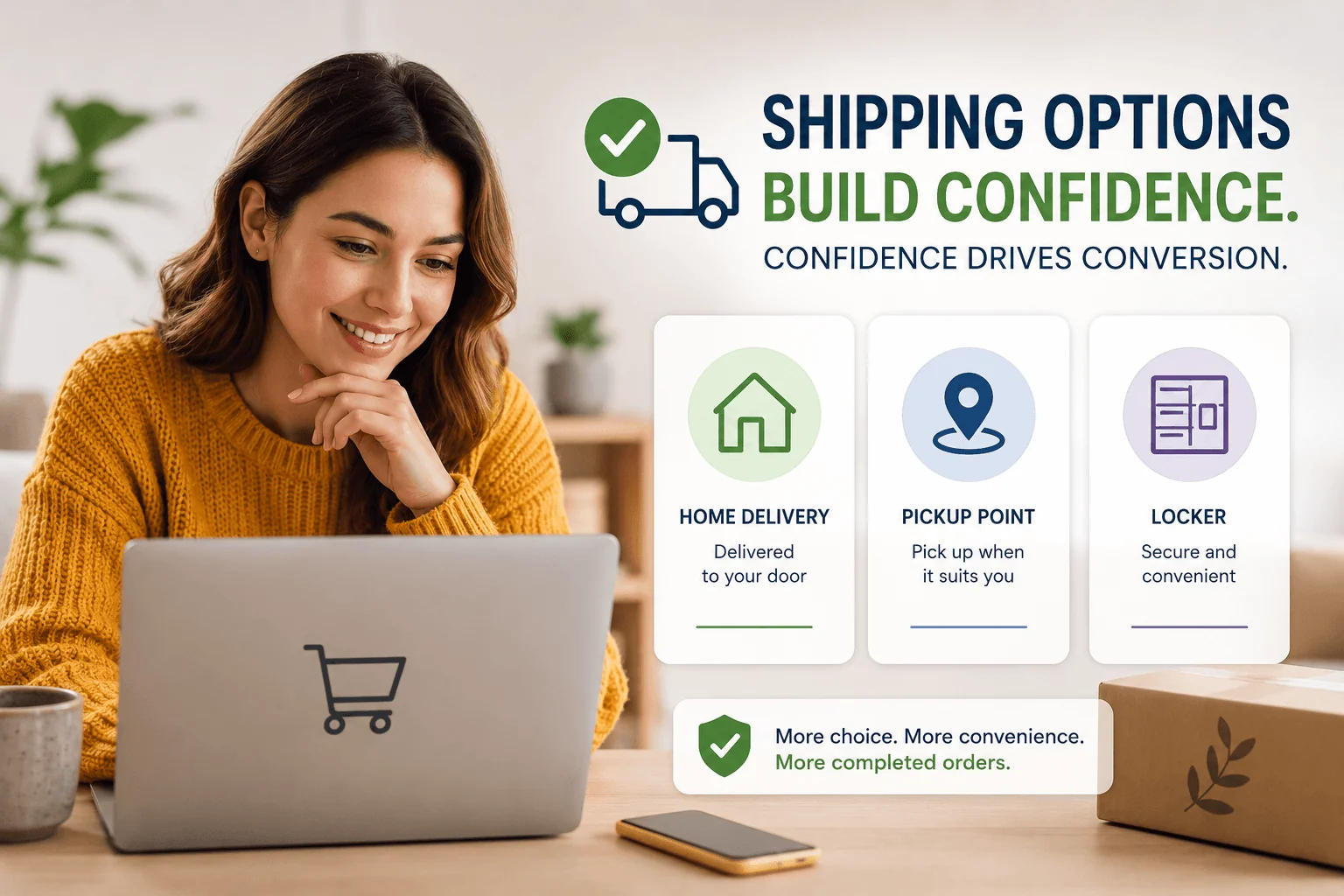
- Today, shipping options are increasingly playing a similar role at checkout.
- Customers want delivery choices that fit their schedules, locations, and lifestyles.
- Offering only one delivery method can create friction and increase cart abandonment.
- Flexible fulfillment options can improve customer satisfaction without relying solely on discounts or return policies.
- Alternative delivery methods, including pickup locations, are becoming a larger part of the ecommerce experience.
Share:
Why checkout confidence has become harder to earn
For years, free returns were one of the most effective tools for increasing ecommerce conversion rates. The reason was simple. Customers felt less risk. If a product did not fit, did not meet expectations, or simply was not needed anymore, they could return it without additional cost. That reassurance often helped shoppers complete purchases they might otherwise have abandoned.
Today, many ecommerce brands face a different challenge. Customers are no longer concerned only about what happens after a purchase. They are paying closer attention to what happens before the package arrives.
Questions that commonly influence buying decisions include:
Today, many ecommerce brands face a different challenge. Customers are no longer concerned only about what happens after a purchase. They are paying closer attention to what happens before the package arrives.
Questions that commonly influence buying decisions include:
- When will the order arrive?
- Can I choose where it is delivered?
- Will I be home when the package arrives?
- What happens if I miss the delivery?
- Can I collect it somewhere else?
- Is there an option that better fits my schedule?
The role free returns played in ecommerce growth
To understand why shipping options matter so much today, it helps to look at the role free returns played in the past. Free returns reduced uncertainty. Customers could make a purchase knowing that mistakes were not permanent. That reduced hesitation and lowered the perceived risk of buying online.
Brands benefited because:
Brands benefited because:
- More shoppers completed purchases.
- Customers were willing to try new products.
- First-time buyers felt more comfortable placing orders.
- Purchase decisions happened more quickly.
Delivery flexibility reduces purchase hesitation
Customers often reach checkout ready to buy. Then a delivery issue appears. Perhaps delivery is only available during work hours. Maybe the estimated arrival date is inconvenient. Perhaps the customer worries that a package will be left unattended. These concerns can interrupt the buying process.
A shopper who wants the product may still postpone the purchase because the delivery method does not fit their circumstances. When businesses offer multiple fulfillment options, customers gain more control over how they receive their orders. That control can reduce uncertainty.
Instead of asking, "Will this delivery work for me?" customers can choose the option that works best. In many situations, that flexibility creates the same psychological benefit that free returns once provided.
A shopper who wants the product may still postpone the purchase because the delivery method does not fit their circumstances. When businesses offer multiple fulfillment options, customers gain more control over how they receive their orders. That control can reduce uncertainty.
Instead of asking, "Will this delivery work for me?" customers can choose the option that works best. In many situations, that flexibility creates the same psychological benefit that free returns once provided.
Customers no longer expect a single delivery choice
A decade ago, standard home delivery was often enough. Today, customers regularly interact with multiple fulfillment models across different retailers.
Many shoppers are already familiar with:
This does not mean every customer wants the same thing. The opposite is true. Different customers value different forms of convenience, which makes flexibility increasingly important.
Many shoppers are already familiar with:
- Home delivery
- Parcel lockers
- Pickup points
- Store pickup
- Collection locations
- Scheduled delivery windows
This does not mean every customer wants the same thing. The opposite is true. Different customers value different forms of convenience, which makes flexibility increasingly important.
The checkout moment where conversion is won or lost
Many ecommerce teams focus heavily on product pages, pricing, and promotions. These elements matter, but conversion decisions are often finalized at checkout.
A customer may spend several minutes evaluating a product and only seconds deciding whether the delivery experience works for them. When delivery expectations are unclear, friction increases.
Common checkout frustrations include:
A customer may spend several minutes evaluating a product and only seconds deciding whether the delivery experience works for them. When delivery expectations are unclear, friction increases.
Common checkout frustrations include:
- Limited delivery windows
- Unexpected shipping fees
- Lack of delivery choices
- Unclear arrival estimates
- Concerns about missed deliveries
- Inconvenient delivery locations
Shipping options influence different customer groups in different ways
Not all customers evaluate delivery in the same way. Understanding these differences helps explain why offering multiple options can improve conversion.
Office workers
Many customers spend most of their day away from home. Receiving a package at a residential address may be inconvenient, particularly for signature-required shipments.
Collection points or pickup locations can provide greater flexibility.
Collection points or pickup locations can provide greater flexibility.
Apartment residents
Apartment deliveries often involve access restrictions, package room limitations, or concerns about lost deliveries.
Alternative pickup options may provide a more predictable experience.
Alternative pickup options may provide a more predictable experience.
Frequent travelers
Customers who travel regularly may struggle to coordinate deliveries around changing schedules.
Flexible fulfillment methods can help them receive purchases when convenient.
Flexible fulfillment methods can help them receive purchases when convenient.
Urban consumers
In densely populated cities, customers often prioritize convenience and accessibility over traditional home delivery.
Pickup locations near daily travel routes can become attractive alternatives.
Pickup locations near daily travel routes can become attractive alternatives.
Signature-required deliveries create a hidden conversion challenge
One area that receives less attention is signature-required shipping. Many customers understand the importance of signatures for higher-value purchases, but they may worry about being available when the package arrives.
These concerns can influence buying behavior. A customer who expects delivery during working hours may hesitate before completing a purchase that requires an in-person signature.
Alternative fulfillment options can help address this issue. When packages are delivered to a collection point, customers can often complete verification when they pick up the shipment. This removes uncertainty around missed delivery attempts and gives customers greater control over timing.
For businesses selling products that require signatures, offering collection-based delivery options can remove a common source of friction during checkout.
These concerns can influence buying behavior. A customer who expects delivery during working hours may hesitate before completing a purchase that requires an in-person signature.
Alternative fulfillment options can help address this issue. When packages are delivered to a collection point, customers can often complete verification when they pick up the shipment. This removes uncertainty around missed delivery attempts and gives customers greater control over timing.
For businesses selling products that require signatures, offering collection-based delivery options can remove a common source of friction during checkout.
Common mistakes brands make with shipping choices
Many businesses recognize the importance of shipping but still make decisions that create unnecessary obstacles.
Assuming customers only want home delivery
Home delivery remains popular, but customer preferences vary widely. Limiting fulfillment options may exclude customers who prefer more flexibility.
Treating delivery as an operational issue only
Delivery affects customer experience, conversion, and retention. It should not be viewed solely as a logistics function.
Hiding delivery information until late in checkout
Customers want clarity early in the buying process. Uncertainty around shipping often creates hesitation.
Offering too many confusing choices
More options are not automatically better. Customers should be able to understand available delivery methods quickly and easily.
Ignoring failed delivery experiences
Customers remember delivery problems. Repeated missed deliveries can affect satisfaction and future purchasing decisions.
Alternative delivery options are becoming part of the customer experience
As ecommerce matures, delivery is becoming more integrated into the overall shopping journey.
Customers increasingly evaluate:
These factors influence how they perceive a brand. The goal is not necessarily to replace home delivery. Instead, many businesses are expanding fulfillment choices to accommodate different customer needs.
A customer who prefers home delivery can still select it. Another customer may choose a pickup location closer to work. Both shoppers receive the same product, but through different experiences.
Customers increasingly evaluate:
- Convenience
- Reliability
- Flexibility
- Accessibility
- Control
These factors influence how they perceive a brand. The goal is not necessarily to replace home delivery. Instead, many businesses are expanding fulfillment choices to accommodate different customer needs.
A customer who prefers home delivery can still select it. Another customer may choose a pickup location closer to work. Both shoppers receive the same product, but through different experiences.
Practical next steps for improving conversion through delivery choice
Businesses interested in improving conversion should begin by evaluating their checkout experience from the customer's perspective.
Consider questions such as:
Customer service inquiries, cart abandonment patterns, and delivery feedback can also provide useful insights.
In many cases, improvements do not require major operational changes. Even introducing a limited number of alternative fulfillment options can help reduce friction for specific customer segments.
Technology providers can support this process by helping brands expand delivery choices. For example, Via.Delivery provides D2C brands and their clients with an alternative delivery option that can fit within a broader strategy focused on customer convenience and fulfillment flexibility.
The objective is not simply to offer more shipping methods. It is to offer the right choices at the right time, helping customers complete purchases with confidence.
Consider questions such as:
- How many delivery options are available?
- Are those options easy to understand?
- Do customers have flexibility around where they receive orders?
- Are signature-required shipments convenient to receive?
- Do delivery methods support different customer lifestyles?
Customer service inquiries, cart abandonment patterns, and delivery feedback can also provide useful insights.
In many cases, improvements do not require major operational changes. Even introducing a limited number of alternative fulfillment options can help reduce friction for specific customer segments.
Technology providers can support this process by helping brands expand delivery choices. For example, Via.Delivery provides D2C brands and their clients with an alternative delivery option that can fit within a broader strategy focused on customer convenience and fulfillment flexibility.
The objective is not simply to offer more shipping methods. It is to offer the right choices at the right time, helping customers complete purchases with confidence.
FAQ
Are shipping options really as important as free returns?
For many customers, shipping options influence decisions before a purchase is completed, while free returns matter after the purchase. Both can affect customer confidence and conversion.
How do shipping options reduce cart abandonment?
Flexible delivery choices help customers select fulfillment methods that fit their schedules and preferences, reducing friction during checkout.
What delivery options do customers commonly expect?
Many shoppers are familiar with home delivery, pickup points, parcel lockers, and store pickup options.
Do alternative delivery methods replace home delivery?
No. Most businesses use alternative delivery methods alongside traditional home delivery to provide greater flexibility.
Can shipping flexibility improve customer satisfaction?
Flexible fulfillment options can reduce delivery-related frustrations and give customers more control over how they receive purchases.
What types of businesses benefit most from delivery choice?
Any ecommerce business can benefit, but brands serving diverse customer groups often gain the most value from offering multiple fulfillment options.