





How Real-Time Tracking Fails to Prevent Theft — And What Actually Works
Key Takeaways
- While 93–97% of customers expect real time tracking, the technology does little to stop porch piracy or last mile losses—more than 1 in 4 Americans experienced package theft in 2023, with billions of dollars in goods lost annually despite advanced tracking tools.
- Real time tracking improves visibility and customer communication, but it cannot physically secure parcels left at doorsteps, apartment lobbies, or shared mailrooms where theft actually occurs.
- Common “fixes” like doorbell cameras, signature requirements, and in-home delivery provide only partial protection while adding cost, friction, and complexity without addressing the core vulnerability of residential delivery.
- The most effective theft prevention strategy shifts delivery from unsecured residential addresses to secure commercial pickup locations which eliminates unattended exposure entirely.
- Merchants can implement secure pickup options through platforms like Via.Delivery, which connects retailers to 36,000+ pickup locations across the U.S., reducing theft claims, last mile costs, and support overhead simultaneously.
Share:
Introduction: Why Real-Time Tracking Isn’t Stopping Package Theft
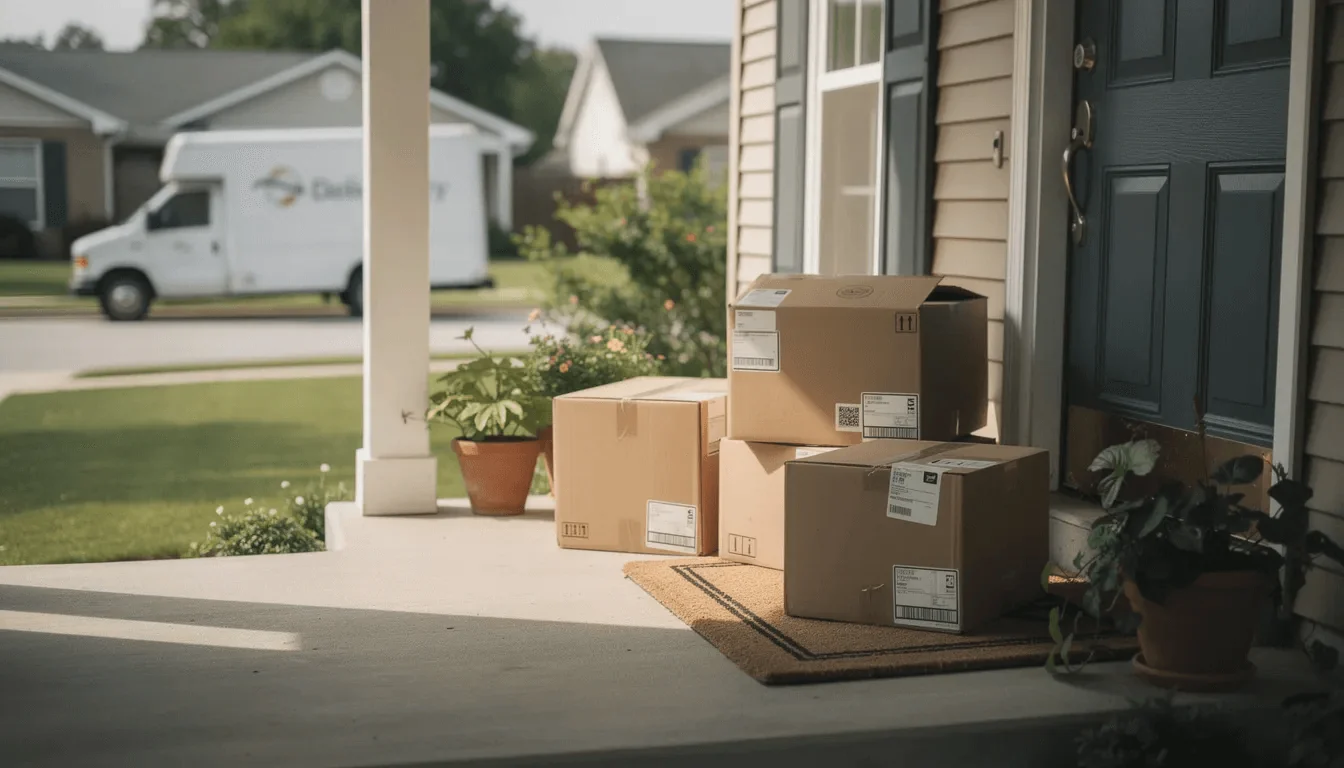
Picture this: A shopper in December 2024 watches their phone as the tracking app shows “Out for Delivery,” then “Delivered” with a photo of a box on their front step. Twelve minutes later, their doorbell camera captures a stranger in a hoodie walking up, grabbing the package, and disappearing around the corner. The tracking worked perfectly. The theft happened anyway.
This scenario plays out hundreds of thousands of times each year. According to consumer surveys from 2023–2024, over 25–30% of Americans have had packages stolen at least once, with hotspots in dense urban areas like San Francisco, New York, and Chicago reporting even higher rates. The financial toll reaches into the billions annually—and it keeps climbing despite massive investments in tracking technology since 2015.
Here’s the uncomfortable truth: real time tracking is a customer experience tool and an exception-management tool for retailers and carriers. It tells shoppers where their order is. It helps dispatchers identify delays. But it is not a theft-prevention solution. Knowing that your package was delivered five minutes ago doesn’t stop someone from stealing it four minutes ago.
This article will critically examine why tracking fails to prevent theft, which popular “fixes” underperform at scale, and what logistics-focused alternatives actually reduce losses. If you’ve been relying on better apps and more SMS updates to solve your porch piracy problem, it’s time to rethink the approach.
This scenario plays out hundreds of thousands of times each year. According to consumer surveys from 2023–2024, over 25–30% of Americans have had packages stolen at least once, with hotspots in dense urban areas like San Francisco, New York, and Chicago reporting even higher rates. The financial toll reaches into the billions annually—and it keeps climbing despite massive investments in tracking technology since 2015.
Here’s the uncomfortable truth: real time tracking is a customer experience tool and an exception-management tool for retailers and carriers. It tells shoppers where their order is. It helps dispatchers identify delays. But it is not a theft-prevention solution. Knowing that your package was delivered five minutes ago doesn’t stop someone from stealing it four minutes ago.
This article will critically examine why tracking fails to prevent theft, which popular “fixes” underperform at scale, and what logistics-focused alternatives actually reduce losses. If you’ve been relying on better apps and more SMS updates to solve your porch piracy problem, it’s time to rethink the approach.
What Real-Time Tracking Actually Does Well (And What It Doesn’t)
Real time tracking in e-commerce logistics refers to the continuous capture and transmission of shipment data—from fulfillment center to regional hub to delivery vehicle to doorstep—with live or near-live updates pushed to customers and retailers. The technology has become table stakes for modern shipping, with 97% of customers expecting to track their orders throughout the entire journey.
When it comes to genuine benefits, tracking delivers significant value in several areas. It dramatically reduces “where is my order?” support tickets by giving customers self-service access to relevant information about their shipment status. It enables better ETA predictions, helping shoppers plan their day around delivery windows. For carriers, tracking data improves route management and helps identify bottlenecks in transit. And proactive notifications—“your package will arrive today between 2-4 PM”—set clearer expectations and improve the customer experience.
These are real wins. Between 2020 and 2024, the shift to detailed mobile tracking pages with maps, driver photos, and delivery confirmation images has transformed how consumers interact with their orders. Many customers now check tracking multiple times per day during the last leg of shipment.
But here’s where the limitations become critical: tracking shows the status and approximate location of a package, but it does not change where that package is left or who can access it. Visibility is not security. A thief watching your neighborhood doesn’t need to check your tracking page—they just need to see a delivery truck drive away. And when your notification arrives saying “Delivered,” you might be at work, on a train, or three states away visiting family. The parcel sitting on your porch is no safer because you know it’s there.
When it comes to genuine benefits, tracking delivers significant value in several areas. It dramatically reduces “where is my order?” support tickets by giving customers self-service access to relevant information about their shipment status. It enables better ETA predictions, helping shoppers plan their day around delivery windows. For carriers, tracking data improves route management and helps identify bottlenecks in transit. And proactive notifications—“your package will arrive today between 2-4 PM”—set clearer expectations and improve the customer experience.
These are real wins. Between 2020 and 2024, the shift to detailed mobile tracking pages with maps, driver photos, and delivery confirmation images has transformed how consumers interact with their orders. Many customers now check tracking multiple times per day during the last leg of shipment.
But here’s where the limitations become critical: tracking shows the status and approximate location of a package, but it does not change where that package is left or who can access it. Visibility is not security. A thief watching your neighborhood doesn’t need to check your tracking page—they just need to see a delivery truck drive away. And when your notification arrives saying “Delivered,” you might be at work, on a train, or three states away visiting family. The parcel sitting on your porch is no safer because you know it’s there.
The Hard Truth: Why Real-Time Tracking Fails to Prevent Theft
Theft is primarily a physical security and access-control problem, not an information deficit problem. No amount of tracking sophistication addresses the fundamental vulnerability: packages left unattended in publicly accessible locations.
Thieves don’t watch tracking pages—they watch neighborhoods. Opportunistic porch pirates learn delivery patterns by observing which houses receive frequent packages and when trucks typically arrive. Professional theft rings may even follow delivery vehicles through suburban routes. The critical insight here is that criminals identify targets through physical surveillance, not digital means.
“Delivered” notifications arrive when recipients are unavailable. The average American is at work, commuting, or otherwise away from home during peak delivery hours (typically 10 AM to 6 PM). By the time a shopper sees the delivery confirmation and heads home, their package may have been sitting exposed for hours.
Packages remain unattended in vulnerable locations. Whether it’s a suburban porch visible from the street, an apartment lobby accessible to anyone who tailgates through the door, or a mailroom that overflows during peak season, the physical circumstances of residential delivery create inherent risk. GPS coordinates and delivery photos do nothing to secure these locations.
Tracking confirms loss but rarely enables recovery. When a package is stolen, tracking data and the driver’s photo prove it was delivered—useful for filing insurance claims, but the merchandise is gone. Law enforcement resources for non-violent, low-dollar crime are limited. In such cases, footage and tracking logs document what happened without deterring future incidents or recovering the goods.
Consider a typical 2023–2024 scenario: A carrier driver scans a box, snaps a photo of it on the doorstep, and marks it “Delivered” before driving to the next stop. Within 5–10 minutes, the parcel disappears. The tracking system functioned flawlessly. The theft happened anyway. Research indicates that in fast-moving crimes—whether porch theft or cargo hijacking—perpetrators act in under 5 minutes on average, far faster than any tracking-triggered response.
Geography compounds these challenges differently across the country. In urban areas, multi-unit buildings with shared lobbies present concentrated risk—dozens of packages piled in an unsecured space. In suburban communities, porch deliveries sit in plain view advertising their presence to anyone passing by. In rural areas, customers often live far from carrier depots and cannot wait at home for a delivery window that might span four hours or more.
Even dynamic ETAs don’t solve the problem. Traffic, weather, and volume variability keep delivery windows too wide for most working adults to guarantee they’ll be home when the driver arrives.
Thieves don’t watch tracking pages—they watch neighborhoods. Opportunistic porch pirates learn delivery patterns by observing which houses receive frequent packages and when trucks typically arrive. Professional theft rings may even follow delivery vehicles through suburban routes. The critical insight here is that criminals identify targets through physical surveillance, not digital means.
“Delivered” notifications arrive when recipients are unavailable. The average American is at work, commuting, or otherwise away from home during peak delivery hours (typically 10 AM to 6 PM). By the time a shopper sees the delivery confirmation and heads home, their package may have been sitting exposed for hours.
Packages remain unattended in vulnerable locations. Whether it’s a suburban porch visible from the street, an apartment lobby accessible to anyone who tailgates through the door, or a mailroom that overflows during peak season, the physical circumstances of residential delivery create inherent risk. GPS coordinates and delivery photos do nothing to secure these locations.
Tracking confirms loss but rarely enables recovery. When a package is stolen, tracking data and the driver’s photo prove it was delivered—useful for filing insurance claims, but the merchandise is gone. Law enforcement resources for non-violent, low-dollar crime are limited. In such cases, footage and tracking logs document what happened without deterring future incidents or recovering the goods.
Consider a typical 2023–2024 scenario: A carrier driver scans a box, snaps a photo of it on the doorstep, and marks it “Delivered” before driving to the next stop. Within 5–10 minutes, the parcel disappears. The tracking system functioned flawlessly. The theft happened anyway. Research indicates that in fast-moving crimes—whether porch theft or cargo hijacking—perpetrators act in under 5 minutes on average, far faster than any tracking-triggered response.
Geography compounds these challenges differently across the country. In urban areas, multi-unit buildings with shared lobbies present concentrated risk—dozens of packages piled in an unsecured space. In suburban communities, porch deliveries sit in plain view advertising their presence to anyone passing by. In rural areas, customers often live far from carrier depots and cannot wait at home for a delivery window that might span four hours or more.
Even dynamic ETAs don’t solve the problem. Traffic, weather, and volume variability keep delivery windows too wide for most working adults to guarantee they’ll be home when the driver arrives.
Common “Fixes” That Don’t Work as Well as Promised
Retailers and consumers have experimented with multiple tactics layered on top of tracking, many of which seem compelling but provide only partial protection at scale. Understanding why these approaches underperform helps clarify why more fundamental changes to the delivery model are necessary.
Why Cameras and “Porch Pirate” Videos Don’t Solve the Problem
Smart cameras and video doorbells exploded in adoption between 2018 and 2024, creating a wave of viral theft videos that generated millions of views on social media. The footage is dramatic—and almost entirely useless for prevention.
Video provides after-the-fact evidence but rarely stops the initial crime. Most thieves wear hoodies, hats, or masks, and they approach quickly when no one is home. The typical porch theft takes under 30 seconds from approach to departure. By the time a homeowner receives an alert and opens their phone, the person is gone.
Law enforcement resources are limited for these crimes. Low-dollar, non-violent thefts often go uninvestigated—police departments in major US cities have publicly acknowledged their limited ability to pursue every porch piracy report. That Ring doorbell footage may never translate into an arrest, prosecution, or recovery.
While some neighborhoods organize around shared footage and community alert apps, this approach is highly uneven and not a scalable systemic solution for national or cross-border e-commerce. Cameras document the problem. They don’t fix it.
Video provides after-the-fact evidence but rarely stops the initial crime. Most thieves wear hoodies, hats, or masks, and they approach quickly when no one is home. The typical porch theft takes under 30 seconds from approach to departure. By the time a homeowner receives an alert and opens their phone, the person is gone.
Law enforcement resources are limited for these crimes. Low-dollar, non-violent thefts often go uninvestigated—police departments in major US cities have publicly acknowledged their limited ability to pursue every porch piracy report. That Ring doorbell footage may never translate into an arrest, prosecution, or recovery.
While some neighborhoods organize around shared footage and community alert apps, this approach is highly uneven and not a scalable systemic solution for national or cross-border e-commerce. Cameras document the problem. They don’t fix it.
Why “Signature Required” Often Backfires
Requiring a signature seems attractive because it forces handoff to an actual person rather than an unattended doorstep. In practice, this approach frequently generates more problems than it solves.
The core issue: customers are typically at work during standard carrier delivery hours. When no one is home to sign, the delivery attempt fails. Multiple attempts raise carrier costs. Packages end up at distant depots or post offices where customers must travel—often during limited business hours—to retrieve them.
Between 2020 and 2024, retailers who implemented signature requirements widely saw specific consequences: higher support volume from frustrated customers, more negative reviews mentioning “held at facility,” and increased return-to-sender incidents when packages weren’t retrieved within the carrier’s holding window.
For lower-ticket items, the added cost and friction of signature services often exceed the value of the goods or the savings from prevented theft. And fundamentally, this method still clings to the residential doorstep as the default destination—it just adds obstacles when nobody’s home to receive the handoff.
The core issue: customers are typically at work during standard carrier delivery hours. When no one is home to sign, the delivery attempt fails. Multiple attempts raise carrier costs. Packages end up at distant depots or post offices where customers must travel—often during limited business hours—to retrieve them.
Between 2020 and 2024, retailers who implemented signature requirements widely saw specific consequences: higher support volume from frustrated customers, more negative reviews mentioning “held at facility,” and increased return-to-sender incidents when packages weren’t retrieved within the carrier’s holding window.
For lower-ticket items, the added cost and friction of signature services often exceed the value of the goods or the savings from prevented theft. And fundamentally, this method still clings to the residential doorstep as the default destination—it just adds obstacles when nobody’s home to receive the handoff.
Why In-Garage and In-Home Delivery Hasn’t Gone Mainstream
Since approximately 2019, major carriers and marketplaces have piloted keyless garage and front-door access deliveries in select US metro areas. The concept: authorize a driver to open your garage or front door, leave the package inside, and close up—all captured on camera for accountability.
The primary barrier is consumer discomfort. Granting strangers or cloud-based systems access to one’s home or garage triggers legitimate concerns about privacy, security, and liability. Despite years of pilot programs, adoption remains concentrated among a small segment of tech-forward homeowners willing to invest in compatible smart locks and garage controllers.
Hardware and installation costs are significant—smart locks, compatible garage door openers, and monitoring cameras add up quickly. For renters, apartment-dwellers, and shoppers in other circumstances without garage access, the solution simply isn’t available.
In-garage and in-home delivery represent an interesting experiment, but they’re fundamentally a niche approach rather than a scalable answer for D2C brands shipping across the country to diverse living situations.
The primary barrier is consumer discomfort. Granting strangers or cloud-based systems access to one’s home or garage triggers legitimate concerns about privacy, security, and liability. Despite years of pilot programs, adoption remains concentrated among a small segment of tech-forward homeowners willing to invest in compatible smart locks and garage controllers.
Hardware and installation costs are significant—smart locks, compatible garage door openers, and monitoring cameras add up quickly. For renters, apartment-dwellers, and shoppers in other circumstances without garage access, the solution simply isn’t available.
In-garage and in-home delivery represent an interesting experiment, but they’re fundamentally a niche approach rather than a scalable answer for D2C brands shipping across the country to diverse living situations.
The Real Risk: Residential Delivery in a High-Theft Environment
The root of the theft problem is not a lack of tracking technology. It’s the practice of leaving goods at unsecured, unmonitored locations—front steps, condo lobbies, apartment mailrooms—where anyone can walk off with them.
Residential delivery creates structural vulnerability that no amount of visibility can overcome. Packages visible from the street advertise value to opportunistic thieves. Delivery volumes surged during 2020–2024, normalizing the sight of boxes on porches all day and training criminals to expect easy targets. Multi-unit buildings often lack staffed reception desks, and package rooms become overwhelmed during peak seasons like November and December.
The data tells the story clearly. E-commerce’s share of total retail sales has grown dramatically since the pandemic, meaning more parcels than ever travel to residential addresses. Total US package theft losses now reach billions of dollars annually. And despite widespread adoption of telematics and tracking—approximately 80% among major carriers—theft incidents continue to rise rather than fall.
Carriers face competing incentives that compound the problem. Drivers are measured on stops per hour and on-time completion rates. They cannot afford to wait for customers to arrive home or coordinate micro-deliveries to individuals in real time. The economic logic of last mile delivery pushes toward fast drop-and-go execution, not secure handoffs.
Meaningful theft reduction requires changing where and how goods are handed off—not just improving how well we can see them moving through the supply chain.
Residential delivery creates structural vulnerability that no amount of visibility can overcome. Packages visible from the street advertise value to opportunistic thieves. Delivery volumes surged during 2020–2024, normalizing the sight of boxes on porches all day and training criminals to expect easy targets. Multi-unit buildings often lack staffed reception desks, and package rooms become overwhelmed during peak seasons like November and December.
The data tells the story clearly. E-commerce’s share of total retail sales has grown dramatically since the pandemic, meaning more parcels than ever travel to residential addresses. Total US package theft losses now reach billions of dollars annually. And despite widespread adoption of telematics and tracking—approximately 80% among major carriers—theft incidents continue to rise rather than fall.
Carriers face competing incentives that compound the problem. Drivers are measured on stops per hour and on-time completion rates. They cannot afford to wait for customers to arrive home or coordinate micro-deliveries to individuals in real time. The economic logic of last mile delivery pushes toward fast drop-and-go execution, not secure handoffs.
Meaningful theft reduction requires changing where and how goods are handed off—not just improving how well we can see them moving through the supply chain.
What Actually Works: Rethinking the Last Mile Instead of Doubling Down on Tracking
Serious theft prevention and cost control in last mile delivery come from redesigning the delivery destination and handoff process, not from adding more app features or notification options.
Three categories of measures materially reduce theft:
Moving deliveries from unattended residential addresses to staffed or secure commercial pickup points. When packages arrive at a retail location with employees present, they’re stored behind counters or in back rooms—never left outside. The physical environment eliminates opportunistic theft entirely.
Using parcel lockers and pickup counters embedded in existing retail networks. Whether it’s an automated locker requiring a PIN code or a staffed counter checking ID, these solutions create controlled access that porches cannot provide. Packages remain secure until the rightful owner retrieves them.
Optimizing routes and contracts around these commercial hubs to lower costs and consolidate stops. Delivering fifty packages to one pharmacy is dramatically more efficient than delivering fifty packages to fifty separate houses.
Real time tracking still has a role in these models. It notifies customers when their parcel arrives at the pickup location and reminds them when the pickup deadline approaches. But now tracking supports a design that is secure by default, rather than serving as the primary (and inadequate) defense against theft.
Three categories of measures materially reduce theft:
Moving deliveries from unattended residential addresses to staffed or secure commercial pickup points. When packages arrive at a retail location with employees present, they’re stored behind counters or in back rooms—never left outside. The physical environment eliminates opportunistic theft entirely.
Using parcel lockers and pickup counters embedded in existing retail networks. Whether it’s an automated locker requiring a PIN code or a staffed counter checking ID, these solutions create controlled access that porches cannot provide. Packages remain secure until the rightful owner retrieves them.
Optimizing routes and contracts around these commercial hubs to lower costs and consolidate stops. Delivering fifty packages to one pharmacy is dramatically more efficient than delivering fifty packages to fifty separate houses.
Real time tracking still has a role in these models. It notifies customers when their parcel arrives at the pickup location and reminds them when the pickup deadline approaches. But now tracking supports a design that is secure by default, rather than serving as the primary (and inadequate) defense against theft.
From “Deliver to My Door” to “Deliver to a Secure Pickup Point”
Shifting from home delivery to commercial pickup locations fundamentally changes the risk profile. A parcel delivered to a staffed pharmacy or grocery store counter is never left unattended outside. There’s no window for a thief to walk by.
Consider concrete examples: A shopper in Los Angeles can pick up a parcel at a nearby pharmacy open until 10 PM, collecting it after work at their convenience. A New York customer selects a corner convenience store near their subway stop and grabs the package during their morning commute. The transaction happens on the customer’s schedule, in a supervised environment.
Staffed pickup counters typically require ID, an order number, or a barcode scan before releasing packages. This verification makes opportunistic porch theft impossible and deliberate theft significantly harder—a thief would need to impersonate the customer and produce matching identification.
This model also addresses the problem of missed deliveries. Customers aren’t racing home hoping to beat the driver. They can collect orders on their own schedule within a defined pickup window, eliminating the entire category of re-delivery attempts and “sorry we missed you” notices.
The customer benefits are clear: flexibility to pick up when convenient, privacy (no packages announcing what you’ve bought sitting on your porch), and confidence that an item won’t disappear while you’re at work or traveling.
Consider concrete examples: A shopper in Los Angeles can pick up a parcel at a nearby pharmacy open until 10 PM, collecting it after work at their convenience. A New York customer selects a corner convenience store near their subway stop and grabs the package during their morning commute. The transaction happens on the customer’s schedule, in a supervised environment.
Staffed pickup counters typically require ID, an order number, or a barcode scan before releasing packages. This verification makes opportunistic porch theft impossible and deliberate theft significantly harder—a thief would need to impersonate the customer and produce matching identification.
This model also addresses the problem of missed deliveries. Customers aren’t racing home hoping to beat the driver. They can collect orders on their own schedule within a defined pickup window, eliminating the entire category of re-delivery attempts and “sorry we missed you” notices.
The customer benefits are clear: flexibility to pick up when convenient, privacy (no packages announcing what you’ve bought sitting on your porch), and confidence that an item won’t disappear while you’re at work or traveling.
Via.Delivery's Network of Pick Up Locations Beats Tracking-Only Approaches
A network of pick up locations is an e-commerce model where customers choose nearby commercial pickup points at checkout instead of home delivery. It’s a structural shift that addresses theft at its source.
Pick up locations network is inherently more secure for several reasons. Packages travel to commercial addresses where theft risk is dramatically lower than residential locations. Many partner locations have cameras, staff, and built-in loss-prevention systems designed to protect merchandise. Parcels are stored inside, away from weather and public view, rather than sitting on exposed doorsteps.
The logistics advantages compound the security benefits. Carriers can deliver many parcels to a single pickup point, reducing last mile stops and time per package. Networks in the US now offer tens of thousands of pickup locations—as of 2024, some networks exceed 36,000 points—making this a practical, scalable option for merchants of all sizes.
Compared to tracking-only strategies, this network creates a fundamentally different risk profile. While tracking informs customers about their order’s location, it physically protects their orders and directly reduces the likelihood of loss events. One is visibility; the other is security.
Pick up locations network is inherently more secure for several reasons. Packages travel to commercial addresses where theft risk is dramatically lower than residential locations. Many partner locations have cameras, staff, and built-in loss-prevention systems designed to protect merchandise. Parcels are stored inside, away from weather and public view, rather than sitting on exposed doorsteps.
The logistics advantages compound the security benefits. Carriers can deliver many parcels to a single pickup point, reducing last mile stops and time per package. Networks in the US now offer tens of thousands of pickup locations—as of 2024, some networks exceed 36,000 points—making this a practical, scalable option for merchants of all sizes.
Compared to tracking-only strategies, this network creates a fundamentally different risk profile. While tracking informs customers about their order’s location, it physically protects their orders and directly reduces the likelihood of loss events. One is visibility; the other is security.
Lockers, Retail Partners, and Commercial Hubs: Concrete Examples
Modern pickup networks leverage diverse location types to maximize coverage and convenience.
National pharmacy chains, independent convenience stores, supermarkets, and other high-traffic retailers serve as partners in these networks.
Two primary handoff models exist within these networks:
National pharmacy chains, independent convenience stores, supermarkets, and other high-traffic retailers serve as partners in these networks.
Two primary handoff models exist within these networks:
| Handoff Type | How It Works | Best For |
|---|---|---|
| Automated Lockers | Customer receives unique PIN or QR code. Scans at locker to retrieve | High-throughput locations, 24/7 access |
| Counter Pickup | Staff member verifies ID and order number. Retrieves package from storage | Locations without locker infrastructure, personalized service |
Consider a practical example: An online apparel brand notices elevated theft claims in specific ZIP codes. They enable secure pickup options for customers in those areas through their checkout flow.
Within one season, theft-related support tickets drop measurably. The brand hasn’t changed their tracking capabilities—they’ve changed where packages end up.
These commercial hubs are often places shoppers already visit weekly for groceries, prescriptions, or everyday essentials. The pickup location isn’t an inconvenient detour; it’s part of an existing routine. This familiarity drives adoption more effectively than requiring trips to distant carrier depots with limited hours.
Within one season, theft-related support tickets drop measurably. The brand hasn’t changed their tracking capabilities—they’ve changed where packages end up.
These commercial hubs are often places shoppers already visit weekly for groceries, prescriptions, or everyday essentials. The pickup location isn’t an inconvenient detour; it’s part of an existing routine. This familiarity drives adoption more effectively than requiring trips to distant carrier depots with limited hours.
Beyond Theft Prevention: Cost, Experience, and Operational Benefits
Secure pickup solutions don’t just reduce crime—they tackle last mile cost pressures and customer experience challenges that real time tracking alone cannot fix.
Cost per delivery improves through route efficiency. Consolidating multiple parcels to single commercial delivery points reduces driver stops, windshield time, and fuel consumption. The math is straightforward: one stop delivering twenty packages beats twenty stops delivering one package each.
Returns, reships, and service workload decrease. When packages don’t get stolen or misdelivered, merchants spend less on replacements, fewer hours investigating claims, and less money on return shipping. The downstream savings compound.
Customer choice and conversion improve. When shoppers see flexible delivery options at checkout—including secure pickup near their office or regular errands—they feel accommodated. For customers without safe porch space, like those in dense urban buildings with no doorman, pickup options may be the deciding factor in completing a purchase.
Experience improves for underserved segments. Apartment dwellers, frequent travelers, and shoppers in high-crime neighborhoods finally have an option that doesn’t require hoping for the best.
Cost per delivery improves through route efficiency. Consolidating multiple parcels to single commercial delivery points reduces driver stops, windshield time, and fuel consumption. The math is straightforward: one stop delivering twenty packages beats twenty stops delivering one package each.
Returns, reships, and service workload decrease. When packages don’t get stolen or misdelivered, merchants spend less on replacements, fewer hours investigating claims, and less money on return shipping. The downstream savings compound.
Customer choice and conversion improve. When shoppers see flexible delivery options at checkout—including secure pickup near their office or regular errands—they feel accommodated. For customers without safe porch space, like those in dense urban buildings with no doorman, pickup options may be the deciding factor in completing a purchase.
Experience improves for underserved segments. Apartment dwellers, frequent travelers, and shoppers in high-crime neighborhoods finally have an option that doesn’t require hoping for the best.
How Pickup Networks Help Control the Last-Mile Cost Explosion
Last mile delivery accounts for an estimated 28–53% of total shipping and logistics costs—the most expensive leg of the entire supply chain journey. Any strategy that reduces last mile spend directly improves margins.
Delivering multiple parcels to a single pickup point reduces driver stops, dwell time, and fuel consumption compared to scattering deliveries across hundreds of residential doorsteps. Each consolidated stop saves minutes, and minutes compound into hours across a driver’s day.
Carriers often offer better rates for commercial deliveries versus residential, recognizing the efficiency gains. Merchants leveraging pick up locations' network solution can negotiate contracts optimized around a relatively fixed set of commercial pickup addresses rather than an ever-changing long tail of residential locations.
A practical example: A mid-sized apparel brand shifts 30% of its volume in high-cost urban markets to pickup points. Within six to twelve months, they document measurable reductions in theft claims, reships, and residential surcharges. The savings flow directly to the bottom line—or get reinvested in better customer support, faster shipping options, or more aggressive marketing.
Delivering multiple parcels to a single pickup point reduces driver stops, dwell time, and fuel consumption compared to scattering deliveries across hundreds of residential doorsteps. Each consolidated stop saves minutes, and minutes compound into hours across a driver’s day.
Carriers often offer better rates for commercial deliveries versus residential, recognizing the efficiency gains. Merchants leveraging pick up locations' network solution can negotiate contracts optimized around a relatively fixed set of commercial pickup addresses rather than an ever-changing long tail of residential locations.
A practical example: A mid-sized apparel brand shifts 30% of its volume in high-cost urban markets to pickup points. Within six to twelve months, they document measurable reductions in theft claims, reships, and residential surcharges. The savings flow directly to the bottom line—or get reinvested in better customer support, faster shipping options, or more aggressive marketing.
Customer Trust, Brand Loyalty, and Reduced Support Overhead
Repeated theft or delivery failures erode customer trust in ways that tracking cannot repair. Negative reviews mentioning stolen packages, churn from frustrated shoppers who switch to competitors, and expensive replacement shipments all drain resources.
Offering secure pickup options signals that a brand takes customers’ time and safety seriously. It differentiates merchants still relying exclusively on doorstep delivery by demonstrating that the business has thought through the entire customer journey—not just the beginning of the shipment but the critical handoff at the end.
Preventing theft events up front eliminates the support tickets that follow. Fewer “my package was stolen” contacts mean lower customer service costs and shorter response times for remaining inquiries. Staff spend less time on contentious investigations into whether items were really delivered and more time on productive customer interactions.
Secure delivery is part of an overall experience strategy, not just a logistics tweak. When customers consistently receive their orders without incident, they credit the retailer—and they come back.
Offering secure pickup options signals that a brand takes customers’ time and safety seriously. It differentiates merchants still relying exclusively on doorstep delivery by demonstrating that the business has thought through the entire customer journey—not just the beginning of the shipment but the critical handoff at the end.
Preventing theft events up front eliminates the support tickets that follow. Fewer “my package was stolen” contacts mean lower customer service costs and shorter response times for remaining inquiries. Staff spend less time on contentious investigations into whether items were really delivered and more time on productive customer interactions.
Secure delivery is part of an overall experience strategy, not just a logistics tweak. When customers consistently receive their orders without incident, they credit the retailer—and they come back.
Turning Strategy into Practice: How Merchants Can Move Beyond Tracking
Merchants don’t need to abandon real time tracking. Instead, they should combine it with better last mile design focused on secure destinations. The goal is layered protection: tracking for visibility and communication, secure pickup for physical safety.
The practical sequence for implementation looks like this:
Key internal stakeholders should align before rollout: operations (to ensure correct labeling and routing), customer support (to handle pickup-related questions), and marketing (to communicate the new option clearly). Consistency across these teams ensures smooth customer experiences.
The practical sequence for implementation looks like this:
- Analyze theft hotspots and delivery failure data by ZIP code or region
- Introduce pickup options at checkout for high-risk areas first
- Integrate with a BOPA/pickup network provider via plugins or API
- Educate customers on benefits and how pickup works
- Monitor results and expand coverage
Key internal stakeholders should align before rollout: operations (to ensure correct labeling and routing), customer support (to handle pickup-related questions), and marketing (to communicate the new option clearly). Consistency across these teams ensures smooth customer experiences.
Step 1: Map Your Theft and Delivery-Failure Patterns
Before enabling new delivery options, understand where problems concentrate. Mining data from your order management system, shipping platform, and support tickets reveals geographic clusters of theft and “not received” claims.
Look for specific signals:
Carrier account representatives can sometimes provide additional exception and claim data for your shipments, adding another layer of insight. The diagnostic phase helps prioritize where secure pickup options will drive the biggest ROI and risk reduction.
Look for specific signals:
- Multiple theft claims from the same building or neighborhood
- Unusually high “lost in transit” rates in certain ZIP codes
- Repeat reshipments to the same addresses
- Seasonal spikes (particularly November–December)
Carrier account representatives can sometimes provide additional exception and claim data for your shipments, adding another layer of insight. The diagnostic phase helps prioritize where secure pickup options will drive the biggest ROI and risk reduction.
Step 2: Add Secure Pickup Options Directly in Checkout
Present pickup options side-by-side with home delivery during checkout, rather than hiding them behind extra clicks or off-site redirects. Customers should see both options clearly and make an informed choice.
Use benefit-focused labels that explain why someone might choose pickup: “Secure pickup at a nearby store (prevents porch theft)” communicates more value than just listing an address. Include estimated pickup dates and store opening hours so customers know what to expect.
Dynamic location selectors—maps or lists showing nearby pickup points—improve adoption by surfacing real, convenient locations. When a customer sees their regular pharmacy or the grocery store they pass daily, the option feels practical rather than inconvenient.
Many modern SaaS logistics providers offer ready-made plugins for major commerce platforms, keeping implementation work light. Consider A/B testing copy and default options to optimize adoption. For example, suggesting pickup as the default in high-theft ZIP codes may significantly reduce claims without forcing anyone’s hand.
Use benefit-focused labels that explain why someone might choose pickup: “Secure pickup at a nearby store (prevents porch theft)” communicates more value than just listing an address. Include estimated pickup dates and store opening hours so customers know what to expect.
Dynamic location selectors—maps or lists showing nearby pickup points—improve adoption by surfacing real, convenient locations. When a customer sees their regular pharmacy or the grocery store they pass daily, the option feels practical rather than inconvenient.
Many modern SaaS logistics providers offer ready-made plugins for major commerce platforms, keeping implementation work light. Consider A/B testing copy and default options to optimize adoption. For example, suggesting pickup as the default in high-theft ZIP codes may significantly reduce claims without forcing anyone’s hand.
Step 3: Integrate Logistics, Labels, and Notifications
Operational accuracy is crucial. Labels, packing slips, and routing data must all correctly reflect the pickup location—not the customer’s home address. A mismatch causes packages to go to the wrong place, frustrating customers and creating support overhead.
Integrate your order management system, warehouse operations, and shipping tools (ShipStation, for example) with your chosen pickup network. Staff should be able to print correct labels without manual address editing or extra steps that introduce errors.
Real time tracking continues to play an important role in this model. Customers should receive notifications when:
Clear instructions in notification emails and SMS matter. Tell customers what ID to bring, how long items will be held, and the opening hours of their selected location. For first-time pickup users, include a brief explanation in the order confirmation or a small insert in the shipping box.
Integrate your order management system, warehouse operations, and shipping tools (ShipStation, for example) with your chosen pickup network. Staff should be able to print correct labels without manual address editing or extra steps that introduce errors.
Real time tracking continues to play an important role in this model. Customers should receive notifications when:
- The parcel is en route to the pickup point
- The parcel has arrived and is ready for pickup
- The pickup deadline is approaching
Clear instructions in notification emails and SMS matter. Tell customers what ID to bring, how long items will be held, and the opening hours of their selected location. For first-time pickup users, include a brief explanation in the order confirmation or a small insert in the shipping box.
Step 4: Measure Results and Refine the Mix
Track key metrics over several months after rollout:
| Metric | What to Measure | Why It Matters |
|---|---|---|
| Theft-related claims | Number and cost of “stolen package” reports | Direct indicator of security improvement |
| Reshipment costs | Replacement shipments sent | Financial impact of prevented theft |
| Pickup adoption rate | % of orders using pickup vs. home delivery | Indicates customer acceptance |
| NPS/satisfaction scores | Customer feedback on delivery experience | Measures experience quality |
Compare performance between regions where pickup is available and where it’s not. This isolation helps quantify the impact of the new last mile approach separate from other variables.
Iterate on policies based on data and feedback. If theft claims drop dramatically in certain ZIP codes after enabling pickup, consider making it the default option there. Share early wins internally—“Theft claims in ZIP 94110 dropped 40% after we enabled secure pickup”—to maintain alignment and investment.
Over time, build targeted strategies. Promote pickup more heavily during seasonal peaks when theft spikes (November–December holidays), or specifically for high-value items where theft represents a larger financial risk.
Iterate on policies based on data and feedback. If theft claims drop dramatically in certain ZIP codes after enabling pickup, consider making it the default option there. Share early wins internally—“Theft claims in ZIP 94110 dropped 40% after we enabled secure pickup”—to maintain alignment and investment.
Over time, build targeted strategies. Promote pickup more heavily during seasonal peaks when theft spikes (November–December holidays), or specifically for high-value items where theft represents a larger financial risk.
Where Via.Delivery Fits In: Secure Pickup at Scale Across the U.S.
Via.Delivery is a B2B SaaS logistics platform focused specifically on alternative delivery option for e-commerce and DTC brands operating in the United States.
The network connects merchants to over 36,000 secure pickup locations across the country—pharmacies, grocery stores, convenience stores, and other retail partners that customers already visit regularly. These are staffed commercial environments where packages are stored safely inside, never left unattended outside.
Via.Delivery helps retailers integrate pickup options at checkout through plugins and APIs, with connections to shipping platforms like ShipStation that automate label printing and routing. The infrastructure handles order tracking, notifications, and label generation so merchants don’t need to build custom logistics technology.
This commercial pickup network addresses the core problems that tracking alone cannot solve:
For third party logistics providers and retailers who’ve watched theft claims rise despite better tracking, Via.Delivery offers an alternative approach: redesign the last mile instead of just tracking it more closely. When packages never sit unattended on a doorstep, they don’t get stolen from doorsteps.
If your current strategy relies on visibility and hope, consider what happens when you replace the vulnerable destination with a secure one.
The network connects merchants to over 36,000 secure pickup locations across the country—pharmacies, grocery stores, convenience stores, and other retail partners that customers already visit regularly. These are staffed commercial environments where packages are stored safely inside, never left unattended outside.
Via.Delivery helps retailers integrate pickup options at checkout through plugins and APIs, with connections to shipping platforms like ShipStation that automate label printing and routing. The infrastructure handles order tracking, notifications, and label generation so merchants don’t need to build custom logistics technology.
This commercial pickup network addresses the core problems that tracking alone cannot solve:
- Eliminates porch piracy by avoiding unattended residential delivery entirely
- Reduces last mile shipping costs by consolidating deliveries to commercial locations
- Cuts down on missed deliveries and signature-related failures
- Improves customer satisfaction with flexible pickup times and clear notifications
For third party logistics providers and retailers who’ve watched theft claims rise despite better tracking, Via.Delivery offers an alternative approach: redesign the last mile instead of just tracking it more closely. When packages never sit unattended on a doorstep, they don’t get stolen from doorsteps.
If your current strategy relies on visibility and hope, consider what happens when you replace the vulnerable destination with a secure one.
FAQ
Will customers actually choose pickup locations over home delivery?
Adoption varies by market, but when pickup options are presented clearly at checkout—with nearby, recognizable locations and explicit mention of theft prevention and flexibility—many customers in high-theft or high-density urban areas prefer them. Younger, urban, and frequently online shoppers are particularly receptive.
Adoption tends to grow once customers try pickup once and see that their orders are consistently secure. The first positive experience builds trust in the model. Merchants can encourage trial by highlighting pickup as “recommended” in ZIP codes with known theft issues, or by occasionally offering promotions tied to pickup usage.
Adoption tends to grow once customers try pickup once and see that their orders are consistently secure. The first positive experience builds trust in the model. Merchants can encourage trial by highlighting pickup as “recommended” in ZIP codes with known theft issues, or by occasionally offering promotions tied to pickup usage.
Does real-time tracking still matter if we move to secure pickup points?
Tracking remains important for transparency, customer communication, and operations even when the destination is secure. In a pickup model, tracking is especially valuable for notifying customers when their package has arrived at the location, when it’s ready for pickup, and when the pickup window is closing.
The key shift is that tracking becomes a complement to a secure physical design rather than the primary defense against theft. You’re still providing the visibility customers expect—you’re just not depending on it to solve a problem it was never designed to solve.
The key shift is that tracking becomes a complement to a secure physical design rather than the primary defense against theft. You’re still providing the visibility customers expect—you’re just not depending on it to solve a problem it was never designed to solve.
How does insurance factor in when moving from home delivery to pickup locations?
Many carriers and merchants currently rely on insurance or self-insurance to absorb the cost of stolen packages. At scale, these claims become a meaningful expense that erodes margin.
Moving to secure commercial pickup points can reduce theft incidents and therefore reduce claims, making insurance a backstop rather than a frequently triggered mechanism. Discuss with your carriers and insurance providers how shifting volume to pickup locations may affect coverage terms, claim processes, and premiums. Some insurers may offer more favorable rates when theft exposure decreases.
Moving to secure commercial pickup points can reduce theft incidents and therefore reduce claims, making insurance a backstop rather than a frequently triggered mechanism. Discuss with your carriers and insurance providers how shifting volume to pickup locations may affect coverage terms, claim processes, and premiums. Some insurers may offer more favorable rates when theft exposure decreases.
Is a pickup-based model viable for rural customers or only for cities?
Dense pickup networks are most common in urban and suburban areas where partner stores are plentiful and order volumes are high. However, rural regions can still benefit where coverage exists—often near small towns or along commuter routes at local grocery stores or pharmacies.
Most merchants use a hybrid approach: enable pickup where the network provides good coverage and continue offering well-managed home delivery elsewhere. Messaging and expectations can differ by region. Rural customers may accept longer delivery windows since alternatives are limited; urban and suburban customers have more options and may prefer pickup for security and convenience.
Most merchants use a hybrid approach: enable pickup where the network provides good coverage and continue offering well-managed home delivery elsewhere. Messaging and expectations can differ by region. Rural customers may accept longer delivery windows since alternatives are limited; urban and suburban customers have more options and may prefer pickup for security and convenience.
How complex is it to integrate a Via.Delivery solution into an existing tech stack?
Modern pick up locations providers offer plugins for common e-commerce platforms and integrations with shipping tools like ShipStation, significantly reducing custom engineering effort. A typical implementation involves configuring the checkout plugin, connecting it to order management and label-printing workflows, and updating customer communications to explain the new option.
Many brands can pilot pickup delivery in selected markets within weeks rather than months, especially if they already use mainstream commerce and logistics platforms. The technology infrastructure is designed for efficient onboarding—the harder work is often internal alignment and customer education rather than technical integration.
Many brands can pilot pickup delivery in selected markets within weeks rather than months, especially if they already use mainstream commerce and logistics platforms. The technology infrastructure is designed for efficient onboarding—the harder work is often internal alignment and customer education rather than technical integration.